ADU Permitting Process: A Step-by-Step Guide for Los Angeles Homeowners
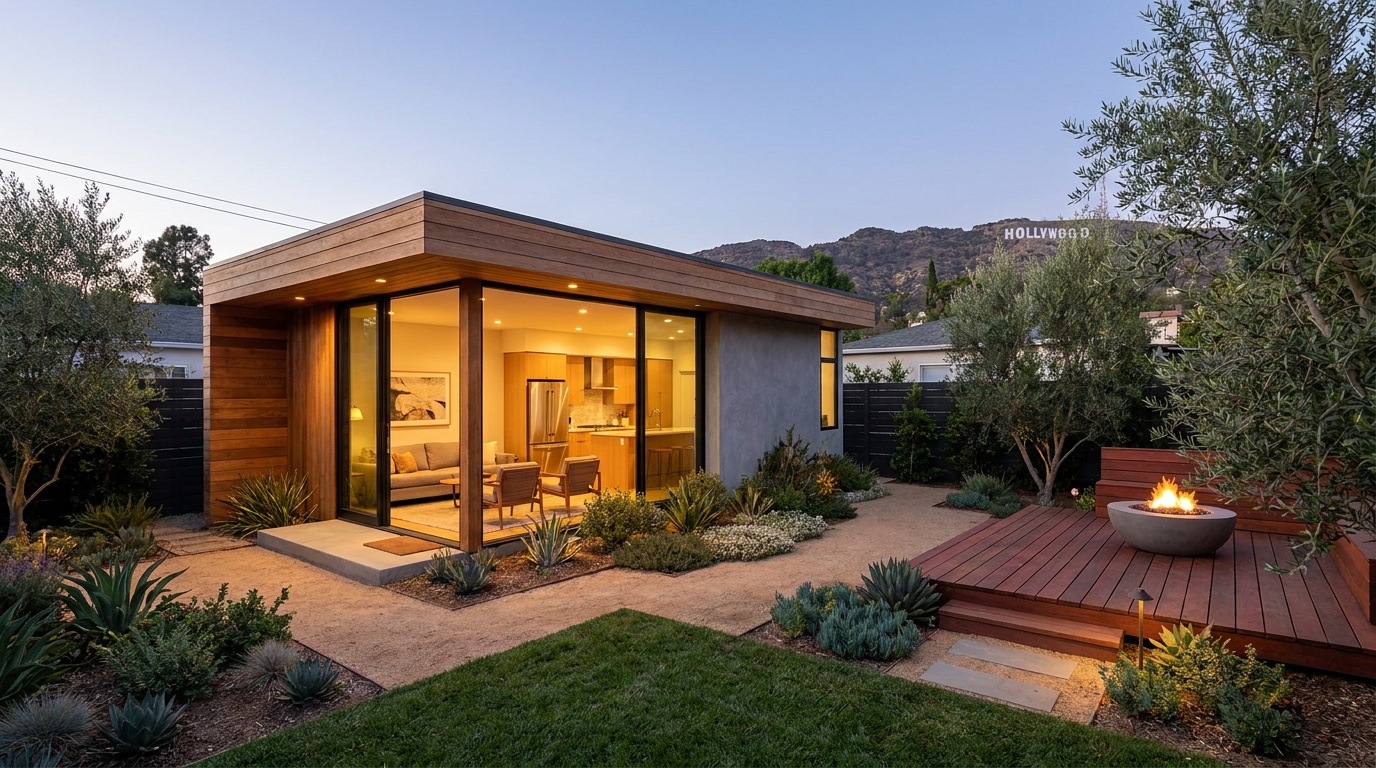
ADU Permitting Process: A Step-by-Step Guide for Los Angeles Homeowners
Reading time: 14 minutes
So you’ve decided to build an Accessory Dwelling Unit on your Los Angeles property. Smart move. Whether you’re envisioning a backyard cottage for rental income, a private suite for aging parents, or a creative live-work studio, the ADU boom is very real — and the financial upside can be significant. But here’s what nobody tells you upfront: the permitting process is where most projects stall, stall again, and sometimes die entirely.
Here’s the good news: Los Angeles has made dramatic strides in streamlining ADU approvals since 2020, and in 2026, the city’s Standard Plan Program and over-the-counter approval pathways have never been more accessible. With the right roadmap, you can navigate this process strategically — turning bureaucratic complexity into a competitive advantage over homeowners who never even start.
This guide breaks it all down: from pre-application research through final inspection, with real-world examples, updated 2026 data, and the kind of practical insight that turns confusion into confident action.
Table of Contents
- Why ADUs Are Dominating LA’s Housing Conversation in 2026
- Before You Apply: The Foundation Work That Saves Months
- The Step-by-Step Permitting Process
- Costs, Timelines, and What to Realistically Expect
- 3 Common Challenges (and How to Overcome Them)
- Real-World Case Studies: Two LA Homeowners, Two Outcomes
- Frequently Asked Questions
- Your ADU Action Plan: From Blueprint to Building Permit
Why ADUs Are Dominating LA’s Housing Conversation in 2026
Los Angeles County has approved over 23,000 ADU permits annually in recent years, with the city of Los Angeles alone accounting for roughly 14,000 of those approvals in 2025. That’s not a trend — that’s a structural shift in how Angelenos think about their property and their financial futures.
The drivers are multiple and mutually reinforcing. Rental demand in LA remains fierce, with median one-bedroom rents hovering around $2,400/month across many neighborhoods as of early 2026. Homeowners with a permitted ADU can generate $1,500 to $3,200 per month in additional income depending on location, unit size, and amenities. Over a decade, that’s potentially $180,000 to $384,000 — transformative money that’s sitting underneath most homeowners’ feet right now.
State law continues to be a powerful tailwind. California’s AB 68, SB 9, and subsequent 2024-2025 legislative updates have systematically dismantled the local barriers that once made ADU permitting feel impossible. In 2026, owner-occupancy requirements have been eliminated for most ADU types, setback rules have been relaxed, and the city’s Preapproved ADU Program means many homeowners can get through the permit process in under 30 days using standardized plan sets.
“The regulatory environment for ADUs in California is the most permissive it’s ever been. Homeowners who understand the system can move remarkably fast.” — California Department of Housing and Community Development, 2025 ADU Handbook
Still, “permissive” doesn’t mean “simple.” Los Angeles’s permitting ecosystem involves multiple city departments, technical documentation requirements, and site-specific variables that can catch even experienced developers off guard. Let’s build your knowledge base from the ground up.
Before You Apply: The Foundation Work That Saves Months
The homeowners who struggle through the permitting process are almost always the ones who skipped the pre-application phase. Don’t be that person. The work you do before filing a single form will determine whether your project sails through or gets buried in correction notices.
Understanding Your Zoning and Property Profile
Start with the LA City Zoning and Planning Portal (ZIMAS) — your single most important tool before any other step. Enter your property address and you’ll immediately see your zoning designation, overlay districts, flood zone status, and any specific plan areas that might apply. This matters enormously because:
- R1 and R2 zones allow attached and detached ADUs as well as Junior ADUs (JADUs) by right
- Hillside areas may have additional grading and geological review requirements
- Historic Preservation Overlay Zones (HPOZs) impose design review requirements that can add 60-90 days to your timeline
- Coastal Zone properties require a separate Coastal Development Permit in many cases
- Fire hazard severity zones trigger upgraded construction standards
Many homeowners discover mid-process that their property sits in one of these special condition areas. Discovering it in ZIMAS before you’ve hired an architect or paid for soil reports saves you real money and real frustration.
Choosing Your ADU Type: A Critical Early Decision
Los Angeles recognizes several distinct ADU categories, and your choice shapes everything from design constraints to fees to approval speed.
- Detached ADU: A standalone structure in the rear or side yard. Maximum 1,200 sq ft (or up to 50% of primary dwelling sq ft, whichever is less in some circumstances). Most popular for rental income maximization.
- Attached ADU: An addition to the existing primary structure. Shares at least one wall. Can be cost-effective if existing foundation and framing can be leveraged.
- Garage Conversion ADU: Converting an existing attached or detached garage. One of the fastest and most cost-effective paths in 2026, especially using standard plans.
- Junior ADU (JADU): A unit of up to 500 sq ft created entirely within the existing primary dwelling. Minimal permitting friction; often approved over the counter.
- Above-Garage ADU: Built above an existing garage structure. Requires structural engineering but can be visually unobtrusive.
Pro Tip: If your primary goal is speed to rental income, a garage conversion or JADU using a preapproved standard plan is almost always your fastest path. If your goal is maximum long-term rental value, a detached ADU of 600-1,000 sq ft with its own outdoor space commands the highest rents and the strongest appraisal uplift.
The Step-by-Step Permitting Process
Here’s where we get into the actual mechanics. Los Angeles ADU permits run through the Department of Building and Safety (LADBS), with involvement from Planning, Public Works, and sometimes other agencies depending on your project’s specifics.
Step 1 — Pre-Application Research and Site Assessment
Before preparing any documents, conduct a thorough site assessment. Walk your property and identify: the location of your main electrical panel and its capacity, existing sewer lateral location and condition, setback distances from all property lines, and any mature trees that might be protected under the city’s tree ordinance. If you’re planning a new detached structure, you may also need a geotechnical report if your property is in a hillside or liquefaction zone — ZIMAS will tell you this.
At this stage, also check whether your property already has any unpermitted structures. Legalizing existing structures as part of your ADU application is possible but adds complexity. A pre-application meeting with LADBS (available online or in-person) can help you understand what’s realistic for your specific property.
Step 2 — Design and Plan Preparation
You have two primary paths here:
- Use a Preapproved Standard Plan: The LA City Preapproved ADU Standard Plan Program (expanded in 2025) offers a library of architect-designed plans covering various ADU types and sizes. Using a standard plan dramatically reduces design costs and plan check time. In 2026, the program includes over 30 plan sets, including several specifically designed for garage conversions and small detached units.
- Custom Design: Hire a licensed architect or designer to prepare project-specific plans. Required for non-standard configurations, hillside sites, historic zones, and larger or more complex units. Costs typically range from $5,000 to $20,000 for design services alone.
Regardless of which path you choose, your plans must include: site plan, floor plans, elevations, electrical plan, plumbing plan, and energy compliance documentation (Title 24). In 2026, solar-ready conduit requirements apply to most new ADU structures, and all new construction must meet updated CALGreen standards.
Step 3 — Submit Your Application
Applications are submitted through the LADBS e-Permit Portal. As of 2026, most ADU permit applications can be submitted entirely online. You’ll need:
- Completed ADU permit application form
- Uploaded plan set (PDF format meeting LADBS file requirements)
- Property ownership verification
- Energy compliance forms (CF1R, CF2R documentation)
- Soils/geological report (if required by your zone)
- Payment of initial plan check fees
For standard plan projects using preapproved designs, many applications are processed over the counter — meaning same-day or next-day approval with no formal plan check period. This is genuinely one of the most underutilized shortcuts available to LA homeowners in 2026.
Step 4 — Plan Check and Corrections
For custom-designed projects, your plans enter the plan check queue. As of 2026, standard ADU plan check times at LADBS average 4-8 weeks for first review (down significantly from the 12-16 week averages seen in 2022-2023). If corrections are issued — and they often are, particularly regarding setbacks, energy compliance, or utility connections — your architect responds and resubmits. Most projects go through 1-2 correction rounds.
Strategic Insight: Request an “over-the-counter” appointment for your plan check if your project is straightforward. LADBS allows applicants to wait while a plan checker reviews simple ADU projects, enabling same-session corrections. This alone can cut weeks off your timeline.
Step 5 — Permit Issuance and Fee Payment
Once plans are approved, you receive a permit issuance notice. You’ll pay your remaining permit fees (calculated based on project valuation) before the permit is formally issued. In 2026, LA has maintained its fee waiver for ADUs under 750 sq ft in low-to-moderate income areas under AB 2221 provisions, which can save qualifying homeowners $5,000-$12,000 in permit fees.
Your permit is valid for 18 months from issuance, with allowance for extension. Construction must begin within this window.
Step 6 — Construction and Inspections
During construction, LADBS will conduct a series of mandatory inspections at defined milestone stages:
- Foundation inspection — before concrete is poured
- Framing inspection — after rough framing is complete
- Rough electrical inspection — before walls are closed
- Rough plumbing inspection — before walls are closed
- Insulation inspection — before drywall
- Final inspection — upon completion of all work
Schedule inspections through the LADBS portal or by phone. In 2026, LADBS offers morning/afternoon windows with typical 1-3 day advance scheduling for most residential projects.
Step 7 — Certificate of Occupancy
After your final inspection passes, LADBS issues a Certificate of Occupancy (or signs off on your permit). This is your official green light. Your ADU is now a legal, permitted dwelling unit — which means it’s insurable, rentable, and value-additive to your property’s appraisal. Do not skip this step or assume your contractor handled it.
Costs, Timelines, and What to Realistically Expect
Let’s put real numbers on this. The total cost of building a permitted ADU in Los Angeles in 2026 varies enormously by type, size, and site conditions — but here’s a grounded framework:
| ADU Type | Typical Cost Range (2026) | Avg. Permit Timeline | Construction Timeline | Est. Monthly Rental Income |
|---|---|---|---|---|
| Junior ADU (JADU) | $30,000–$80,000 | 1–4 weeks | 4–8 weeks | $1,400–$2,000 |
| Garage Conversion | $80,000–$160,000 | 2–6 weeks | 8–16 weeks | $1,800–$2,600 |
| Attached ADU | $150,000–$280,000 | 4–10 weeks | 12–20 weeks | $2,000–$3,000 |
| Detached ADU (600–800 sq ft) | $200,000–$350,000 | 5–12 weeks | 16–28 weeks | $2,400–$3,200 |
| Prefab/Modular Detached ADU | $160,000–$280,000 | 3–8 weeks | 8–16 weeks | $2,200–$3,000 |
Permit Fee Breakdown: What You’re Actually Paying For
Permit fees in Los Angeles are calculated based on the project valuation — essentially the estimated construction cost. For a 700 sq ft detached ADU with a construction valuation of $220,000, you might expect to pay:
- Building permit fee: $3,200–$5,500
- Plan check fee: $1,500–$2,800
- Electrical permit: $400–$800
- Plumbing permit: $300–$600
- Mechanical permit: $200–$400
- School fees (waived for ADUs under 500 sq ft): $0–$3,200
- Sewer connection fee: $2,000–$8,000 (site dependent)
Total permit and fee costs for most LA ADU projects in 2026 fall between $8,000 and $22,000, representing roughly 4-8% of total project cost. This is actually lower than it was in 2022, thanks to state-mandated fee caps and city fee reform efforts.
ADU Approval Complexity by Type
The chart below illustrates relative permitting complexity scores (out of 100) for different ADU types in Los Angeles, based on average number of department reviews, correction rounds, and specialized requirements:
*Complexity score reflects average plan check rounds, department touchpoints, and special requirements. Lower = simpler process.
3 Common Challenges (and How to Overcome Them)
Challenge 1: Utility Capacity and Connection Costs
This is the surprise that derails the most ADU projects in Los Angeles. Many older homes have 100-amp electrical service — adequate for the primary residence, but insufficient once you add an ADU. Upgrading to 200-amp service (or adding a sub-panel) can cost $3,000-$8,000 and requires coordination between LADBS, LADWP (LA Department of Water and Power), and your electrician. Start this conversation early, because LADWP’s scheduling backlog can add 4-6 weeks to your project.
Similarly, the Los Angeles Bureau of Sanitation may require a sewer capacity assessment before approving your ADU connection. In some older neighborhoods, lateral upgrades are required at homeowner expense — a cost that can reach $15,000-$25,000 in extreme cases. ZIMAS and a pre-application consultation with the Bureau can identify this risk before you’ve committed to a design.
The Fix: Budget a 15-20% contingency specifically for utility-related surprises. Get a plumber and electrician to assess your existing systems as part of your pre-application due diligence — before you hire an architect.
Challenge 2: Navigating Historic Preservation Overlay Zones
If your home sits within one of LA’s 34 HPOZs — neighborhoods like Hancock Park, South Carthay, or Angelino Heights — your ADU project takes on an additional layer of design review. The HPOZ Board evaluates whether your proposed ADU is architecturally compatible with the neighborhood’s historic character. This isn’t a rubber-stamp process; boards can and do require design modifications related to massing, materials, window styles, and visibility from the street.
The good news is that state law has limited HPOZ boards’ ability to outright deny ADUs on compatibility grounds since 2022. But they can impose conditions that add cost and time. The Preservation Plan for your specific HPOZ (available on the city’s planning portal) is essential reading before you finalize any design.
The Fix: Hire an architect who has specific experience designing ADUs in your HPOZ. This isn’t the time for a generalist. Someone who has gone through the HPOZ review process recently will know which design choices sail through and which ones generate months of back-and-forth.
Challenge 3: Contractor Selection and Project Management
Los Angeles has no shortage of contractors claiming ADU expertise, but the quality spectrum is enormous. Poorly coordinated construction — where electrical, plumbing, and framing work aren’t sequenced correctly — leads to failed inspections, rework costs, and project delays that can stretch a 16-week project to 10 months.
In 2026, the LA ADU construction market is highly competitive, but materials costs and labor rates remain elevated. Be skeptical of bids that come in dramatically below market — they often reflect corners being cut on permits, licensed subcontractors, or materials quality.
The Fix: Verify that any contractor you hire holds a valid California Contractor’s State License Board (CSLB) license (Class B General Building for ADUs is typical), has specific ADU project experience with verifiable references, and carries both general liability and workers’ compensation insurance. Use the CSLB online license check tool — it takes 90 seconds and can save you from a catastrophic hiring mistake.
Real-World Case Studies: Two LA Homeowners, Two Outcomes
Case Study 1: Maria’s 45-Day Garage Conversion in Boyle Heights
Maria, a public school teacher and homeowner in Boyle Heights, decided in mid-2025 to convert her detached 400 sq ft garage into a rental unit. Her property was in a standard R2 zone with no overlay complications. She found a preapproved standard plan from the city’s ADU library that matched her garage’s dimensions almost exactly.
Using the standard plan, her permit application was submitted online and approved over the counter in 11 business days. Her contractor — a Boyle Heights-based builder with 15 previous ADU conversions on his portfolio — completed construction in 9 weeks. Total all-in cost: $94,000. The unit rented within 3 weeks of the Certificate of Occupancy for $2,100/month. Maria expects to recover her full investment in approximately 3.7 years and is already planning a second JADU within the primary residence.
Key lesson: Choosing a standard plan in a straightforward zoning environment, combined with an experienced local contractor, produced the fastest possible outcome. Maria did her ZIMAS homework first and knew exactly what she was working with before spending a dollar.
Case Study 2: The Castellanos Family’s Hollywood Hills Detached ADU
The Castellanos family owned a 1940s Spanish Colonial home in the Hollywood Hills — a hillside property in a designated fire hazard severity zone, but outside any HPOZ. They wanted a 750 sq ft detached ADU for a rental income + family guest suite hybrid. The project required custom plans (hillside sites are ineligible for most standard plans), a geotechnical report ($4,200), and a grading permit in addition to the building permit.
The permitting process took 19 weeks — two correction rounds related to fire sprinkler requirements and a soils report addendum. Construction took an additional 28 weeks due to the complexity of hillside foundation work and the requirement for fire-resistant exterior cladding materials. Total cost: $387,000.
The unit now rents for $3,100/month and has added an estimated $420,000 to the property’s appraised value. The family’s investment was significantly larger — and the process significantly more demanding — but the financial and lifestyle outcome has been transformative.
Key lesson: Complex site conditions require proportionally more time, money, and expert guidance. The Castellanos family succeeded because they budgeted realistically, hired an architect and geotechnical engineer with specific hillside experience, and resisted the temptation to cut corners during plan check. Their 19-week permit timeline felt frustrating at the time; in hindsight, it was entirely predictable given their site’s characteristics.
Frequently Asked Questions
Can I build an ADU if I have an existing unpermitted structure on my property?
Yes, but it requires careful navigation. Los Angeles does not automatically reject ADU permit applications simply because an unpermitted structure exists on the property. However, LADBS may identify the unpermitted structure during plan check and require that you either legalize it or demolish it as a condition of your ADU permit. In some cases, homeowners choose to incorporate an existing unpermitted structure into the ADU legalization — essentially permitting both simultaneously. The safest approach is to disclose the situation in a pre-application consultation with LADBS and get written guidance on your specific circumstances before proceeding.
Do I need to live on the property to rent out my ADU in 2026?
No. California law eliminated owner-occupancy requirements for ADUs statewide in 2020, and this remains in effect in 2026. You can rent out your ADU — and even your primary dwelling — without being required to live on the property. Note that if you have a JADU specifically, local and state regulations may still require owner occupancy in certain circumstances; always verify the current rules for your specific ADU type with the LA Department of City Planning before making rental decisions. Short-term rentals (Airbnb/VRBO) for ADUs are governed by LA’s Home Sharing Ordinance, which has its own registration and compliance requirements separate from the ADU permit.
What happens if I build an ADU without a permit in Los Angeles?
The consequences are serious and have become increasingly enforced. An unpermitted ADU cannot be legally rented, is not covered by standard homeowner’s insurance as a dwelling unit, and will create significant problems when you refinance or sell the property (lenders and appraisers specifically verify ADU permit status). The City of LA has increased code enforcement activity around unpermitted ADUs since 2024, and violations can result in stop-work orders, fines of $1,000-$5,000 per day, and mandatory demolition orders in extreme cases. The LA city “Amnesty” legalization pathway still exists for qualifying unpermitted units, but it involves a full retroactive permit process that is often more expensive and complicated than doing it right the first time.
Your ADU Action Plan: From Blueprint to Building Permit
You’ve now got the comprehensive framework. Here’s how to convert that knowledge into momentum — a practical 5-step action plan you can begin executing this week:
- Run your ZIMAS report today. Go to zimas.lacity.org, enter your address, and screenshot your zoning designation, overlay districts, and hazard zone status. This single 10-minute exercise will define your entire project strategy.
- Define your ADU type and financial goal. Are you optimizing for speed, income, or long-term property value? Your answer shapes whether you pursue a JADU, garage conversion, or custom detached ADU. Model the numbers: construction cost ÷ projected monthly rent = your payback period. Aim for under 8 years to ensure strong financial logic.
- Explore the Preapproved Standard Plan library. Visit the LADBS website and download the current standard plan catalog. If any plan matches your vision and site, you’ve potentially saved yourself months and thousands of dollars before spending a cent on design.
- Assemble your professional team early. For standard projects: a licensed contractor with ADU experience. For custom or complex sites: add a licensed architect and possibly a geotechnical engineer. Vet all professionals through the CSLB database. Request ADU-specific project references.
- Budget for the full process, not just construction. Your real budget includes design, permits, utility upgrades, construction, contingency (15-20%), and furnishing/landscaping if you’re targeting premium rental rates. Homeowners who budget accurately from day one experience far less stress and make better decisions throughout.
The broader context here is significant: Los Angeles is in the middle of a generational transformation of its housing stock, and ADUs are a central mechanism driving that change. By 2027, analysts project LA County will have over 100,000 permitted ADUs in operation — a new neighborhood-scale layer of housing built not by developers, but by homeowners exactly like you.
You have the knowledge. You have the roadmap. The only question left is: what will your property look like — and what will it be earning — three years from now if you start this process today?
Article reviewed by Pablo Reyes, Wood Flooring Installation & Restoration Expert, on May 4, 2026
