Indoor-Outdoor Flow Design: Creating the Perfect California Living Experience
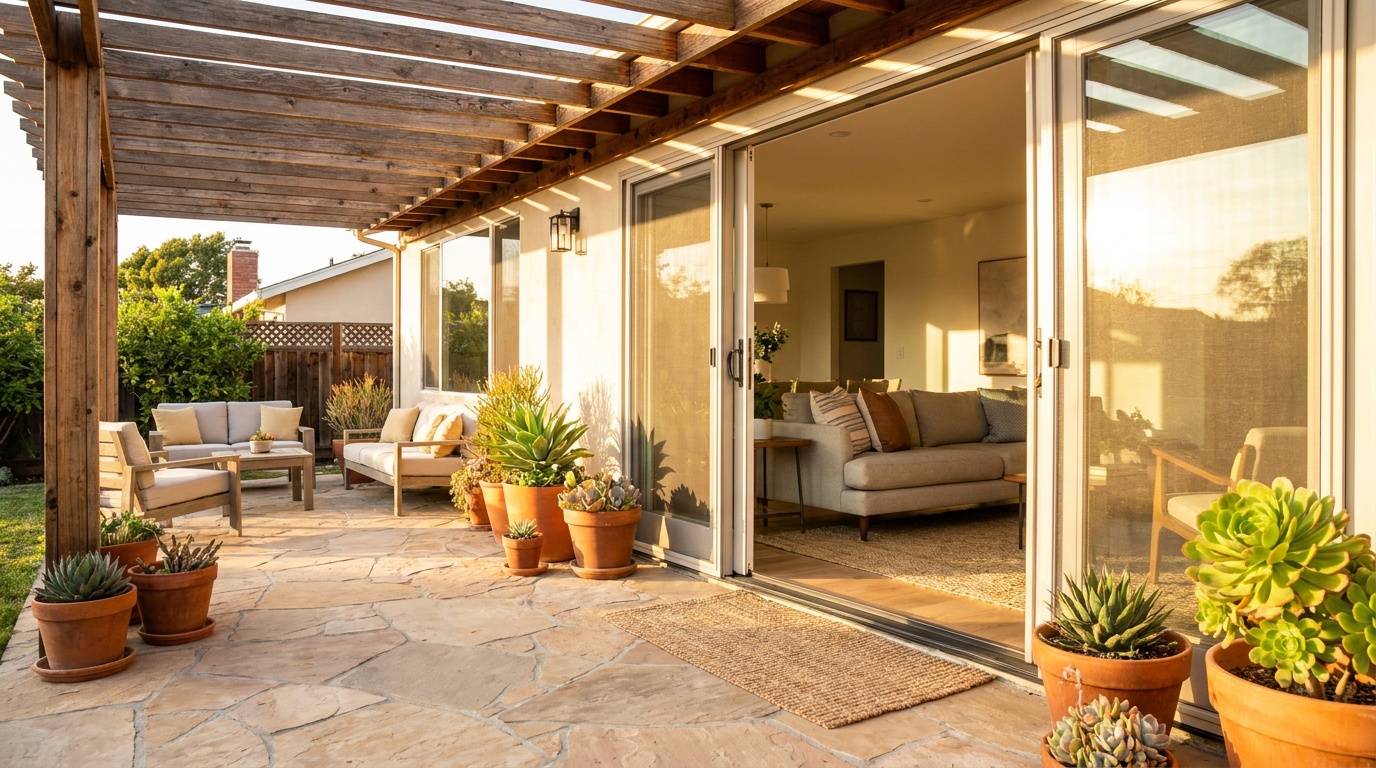
Indoor-Outdoor Flow Design: Creating the Perfect California Living Experience
Reading time: 14 minutes
Picture this: It’s a golden Tuesday afternoon in Santa Barbara. The marine layer burned off by 10 a.m., the jacarandas are in bloom, and your living room seamlessly dissolves into a sun-drenched patio where your kids are kicking a soccer ball. No threshold. No barrier. Just life, flowing.
That’s not a fantasy reserved for architectural magazine spreads — it’s the lived reality that smart indoor-outdoor flow design delivers every single day. And in 2026, California homeowners aren’t just dreaming about this lifestyle; they’re building it with more precision, sustainability, and creativity than ever before.
Whether you’re retrofitting a mid-century bungalow in Pasadena or designing a new coastal retreat in Marin County, the principles of indoor-outdoor flow have evolved into a sophisticated discipline that touches architecture, interior design, landscaping, and even mental wellness. Let’s unpack all of it — strategically, practically, and with a few real-world stories along the way.
Table of Contents
- What Is Indoor-Outdoor Flow — Really?
- Why California Is the Global Capital of Flow Design
- The Core Design Elements That Make It Work
- Real-World Case Studies: Flow in Action
- Common Challenges and How to Overcome Them
- Flow Design Impact: A Visual Overview
- Comparing Flow Design Approaches: A Quick Reference
- Frequently Asked Questions
- Your California Living Blueprint: Next Steps
What Is Indoor-Outdoor Flow — Really?
The phrase “indoor-outdoor flow” gets tossed around endlessly in real estate listings and design blogs, but what does it actually mean in practice? At its core, indoor-outdoor flow refers to the deliberate design strategy of eliminating — or radically minimizing — the physical and psychological boundary between interior living spaces and the exterior landscape.
It’s more than just a sliding door or a big window. True flow encompasses:
- Architectural continuity: Matching floor levels, aligned sightlines, and consistent structural language inside and out
- Material cohesion: Using the same or complementary materials indoors and outdoors so the eye travels without interruption
- Thermal comfort engineering: Climate strategies like radiant heating, shade structures, and smart glazing that make outdoor spaces usable year-round
- Sensory design: Managing light, sound, scent, and texture to create immersive transitions
- Functional programming: Positioning outdoor kitchens, dining zones, and lounging areas as true extensions of their indoor counterparts
According to the American Institute of Architects’ 2025 Home Design Trends Survey, 78% of residential architects reported that clients in the Western United States specifically requested improved indoor-outdoor connectivity as a top-three priority — up from 61% in 2022. That’s not a trend. That’s a cultural shift.
“The best indoor-outdoor design doesn’t announce itself. When it’s done right, you simply find yourself outside without realizing you crossed a threshold.” — Mia Holloway, FAIA, Principal at Holloway Studio, Los Angeles
Why California Is the Global Capital of Flow Design
California didn’t invent the concept of blending inside and outside — that distinction belongs to ancient Mediterranean and Japanese architectural traditions. But California perfected it for the modern age, and the reasons are deeply rooted in geography, culture, and economic reality.
The Climate Advantage
California’s Mediterranean climate zones — covering roughly 60% of the state’s populated regions — offer 260 to 320 sunny days per year in areas like San Diego, Los Angeles, and the Central Valley. Even the notoriously foggy Bay Area averages over 250 sunny days. This creates an almost-irresistible invitation to design for the outdoors.
Unlike humid Southern climates or cold Northeastern ones, California’s low humidity and mild winters mean that outdoor spaces can realistically function 10 to 12 months a year — provided the design accounts for seasonal variations. In 2026, with California’s smart home technology adoption rate among the highest in the nation, homeowners are increasingly using automated pergolas, motorized screens, and climate-responsive glazing to push that usability even further.
The Economic Motivator
Here’s a number that should make any California homeowner sit up: A 2025 Zillow/Redfin joint analysis found that homes in California with professionally designed indoor-outdoor flow features sold for an average of 11.4% more than comparable properties without those features. In a state where median home prices hover around $850,000 in 2026, that’s nearly $97,000 in added value.
Outdoor living upgrades — covered patios, pocket-door systems, seamless flooring — consistently rank among the top ROI improvements a California homeowner can make. The investment isn’t just aesthetic; it’s financial strategy.
The Cultural and Wellness Dimension
California’s wellness culture, from Silicon Valley biohackers to Malibu yoga retreats, has embraced outdoor living as a health imperative. Research published in the Journal of Environmental Psychology (2024) confirmed that access to nature-integrated living spaces reduces cortisol levels by up to 21% compared to fully enclosed environments. Californians didn’t need a study to tell them that — but it validates what the state’s design culture has practiced for decades.
The Core Design Elements That Make It Work
Getting indoor-outdoor flow right requires orchestrating multiple design disciplines simultaneously. Here’s where to focus your energy and budget:
The Threshold: Your Most Critical Design Decision
The threshold — the physical connection point between inside and outside — is the beating heart of flow design. Get this wrong and everything else is cosmetic.
In 2026, the most effective threshold solutions include:
- Multi-panel sliding or folding glass walls: Systems from brands like NanaWall and Centor can open up to 20 feet of unobstructed aperture, completely dissolving a wall. Expect to invest $1,500–$3,500 per linear foot for premium systems.
- Zero-threshold sill profiles: ADA-compliant sills that create a flush transition between interior and exterior floor surfaces, eliminating the trip hazard and visual interruption of a traditional door frame.
- Pocket doors integrated into structural walls: When panels disappear entirely into the wall cavity, the connection feels architectural rather than operational.
- Lift-and-slide systems: A European innovation now widely available in California, these doors combine the security of a traditional door with the effortless operation of a sliding panel — perfect for heavy-use family spaces.
Pro Tip: Always specify the same or complementary flooring material at the transition point. If you have large-format porcelain tiles indoors, carry the same tile (in an outdoor-rated slip-resistant version) through to the patio. This single decision does more for perceived flow than almost any other.
Flooring Continuity: The Visual Bridge
Nothing interrupts flow faster than a dramatic material change at the threshold. The most successful California flow designs use one of three strategies:
- True continuity: The same material, same grout lines, same pattern — indoors and out. Requires outdoor-rated versions of interior materials (porcelain, sealed concrete, large-format stone).
- Tonal continuity: Different materials that share color temperature and value — warm-toned wood-look tile inside, warm teak decking outside.
- Complementary contrast: Intentional but harmonious material shifts that signal a transition without rupturing the design narrative — polished concrete inside transitioning to brushed limestone outside.
Glazing Strategy: Light as a Design Material
California’s abundant natural light is a gift, but unmanaged glazing creates glare, heat gain, and energy inefficiency. The solution in 2026 lies in smart glazing technology:
- Electrochromic glass (dynamically tinting glass, like View Inc.’s systems) automatically adjusts tint based on sun angle and interior temperature, reducing HVAC load by up to 20%.
- Low-E coatings on glass panels that block infrared heat while maximizing visible light transmission.
- Strategic orientation: Most California architects recommend maximizing south and west-facing apertures with deep overhangs (typically 18–24 inches) to balance winter warmth with summer shade.
Outdoor Rooms: Programming the Exterior
The most common mistake in flow design is treating the outdoor space as a leftover. The outdoor “room” needs to be programmed with the same intentionality as the interior:
- Define zones: Cooking zone, dining zone, lounging zone, and transition/circulation zone — each with appropriate scale and furnishing.
- Anchor with a ceiling plane: A pergola, shade sail, or covered structure creates the psychological sense of “room” outdoors and provides functional weather protection.
- Control the perimeter: Strategic planting, privacy screens, or low walls define the outdoor room’s edges without enclosing it oppressively.
Real-World Case Studies: Flow in Action
Case Study 1: The Silver Lake Pivot
In 2024, a couple in Silver Lake, Los Angeles purchased a 1,650-square-foot 1960s ranch home with a small, disconnected backyard. Their challenge: the living room wall facing the backyard was solid load-bearing concrete block with a single 36-inch door. The outdoor space felt like an afterthought.
Working with a licensed structural engineer and a Los Angeles-based design-build firm, they executed a targeted flow renovation over 14 weeks in late 2024 and early 2025:
- Removed and reengineered the rear concrete wall, installing a steel moment frame to support a new 16-foot NanaWall folding glass system
- Extended the interior polished concrete floor as a honed exterior patio — same aggregate, same color, outdoor slip rating
- Added a powder-coated steel pergola with automated Somfy-motorized shade louvers
- Installed an outdoor kitchen counter with a built-in grill that mirrors the interior kitchen island’s orientation
Total project cost: $148,000. A 2026 appraisal placed the home’s value increase at approximately $210,000 over its pre-renovation comparable sales. More importantly, the family reports using their “outdoor room” an average of five days per week throughout the year.
Case Study 2: The Marin County Minimal Intervention
Not every flow project requires structural heroics. A retired architect in Mill Valley inherited a 1978 post-and-beam home with excellent bones but a disconnected relationship to its redwood-canyon setting. The existing sliding doors were functional but dated, and the deck had deteriorated.
Her approach was philosophically different: minimize intervention, maximize awareness. The project included:
- Replacing original aluminum sliding doors with flush-track lift-and-slide doors (Schuco system) in the same rough opening — no structural changes
- Replacing the weathered redwood deck with reclaimed ipe, extending 4 feet wider on each side to enlarge the outdoor zone
- Adding a linear gas fire feature at the deck’s far edge to create a visual focal point drawing the eye outward
- Strategic landscape editing — removing overgrown camellias that blocked canyon views, replacing with low bunchgrass and native deer grass
Total cost: $67,000. The psychological transformation was described by the homeowner as “like removing a blindfold.” The project took nine weeks and required only standard building permits.
The lesson: Indoor-outdoor flow isn’t always about demolition and reconstruction. Sometimes, precision editing — better doors, clearer sightlines, smarter planting — achieves transformative results at a fraction of the cost.
Common Challenges and How to Overcome Them
Challenge 1: California’s Wildfire and Air Quality Concerns
In 2026, this is the elephant in every California outdoor living conversation. The 2025 fire season was another record-setter, and many homeowners in fire-adjacent zones are hesitant to invest in outdoor living spaces that might be at risk — or that connect to interiors during smoke events.
The strategic response:
- Specify Class A fire-rated exterior materials throughout — fiber cement, metal cladding, ignition-resistant decking like Trex’s Wildfire-rated series
- Install MERV-13 or higher air filtration in your HVAC system so you can seal the home during AQI spikes without sacrificing air quality
- Choose operable exterior screens on folding glass systems that allow ventilation while filtering particulates during moderate air quality events
- Design outdoor rooms with fire-resistant plant buffers using California natives like sage, manzanita (properly spaced), and succulent groundcovers
“The wildfire question has fundamentally changed how we detail outdoor connections in California. We design for two scenarios now: perfect days and bad air days. Good systems handle both.” — Carlos Mendoza, AIA, Principal, Terrain Architecture, Oakland
Challenge 2: Energy Code Compliance vs. Maximal Glazing
California’s Title 24 energy code — updated in 2026 — is among the most stringent in the nation. Large glass openings create real challenges for envelope performance compliance, particularly in climate zones with significant heating or cooling loads.
How to navigate this:
- Work with an energy consultant early in design — before you’ve committed to glass sizes — to run energy models
- Use triple-glazed units with warm-edge spacers in zones with significant heating degree days (Bay Area, Inland Empire winters)
- Balance large south-facing glass with reduced glazing on north walls to achieve overall envelope compliance
- Solar panels on pergola roofs or adjacent structures can offset the energy penalty of increased glazing area
Challenge 3: The Privacy Paradox
Maximum openness often conflicts with the privacy expectations of California’s dense suburban neighborhoods. A homeowner who dissolves their rear wall into a glass opening can suddenly feel exposed to neighbors on all sides.
Smart solutions include:
- Layered landscaping: Fast-growing columnar trees (Italian cypress, Sky Pencil holly) positioned strategically to screen without blocking light
- Perforated metal screens: Architecturally integrated panels that filter views while allowing airflow and light
- Level changes: Raising the outdoor room 18–24 inches above the surrounding grade redirects neighboring sightlines
- Strategic water features: A wall-mounted water feature on the exposed side creates acoustic privacy while adding sensory richness
Flow Design Impact: A Visual Overview
The following chart illustrates the reported quality-of-life improvements California homeowners experienced after implementing indoor-outdoor flow design upgrades, based on a 2025 California Home Design Survey of 1,200 households.
Quality-of-Life Improvements After Flow Design Renovation
Source: California Home Design Survey 2025, n=1,200 homeowners across Los Angeles, Bay Area, San Diego, and Sacramento metro regions.
Comparing Flow Design Approaches: A Quick Reference
| Approach | Best For | Typical Cost Range | ROI Potential | Disruption Level |
|---|---|---|---|---|
| Full glass wall system (NanaWall, Centor) | New construction or major remodel | $45,000–$120,000+ | High (10–15%) | High |
| Lift-and-slide upgrade | Existing door replacement | $8,000–$25,000 | Moderate (5–8%) | Low–Moderate |
| Outdoor room + cover structure | Extending usable space | $20,000–$75,000 | Moderate–High (7–12%) | Moderate |
| Landscape & sightline editing | Homes with good bones but poor visual flow | $5,000–$30,000 | Moderate (4–7%) | Low |
| Full integrated renovation | Whole-home transformation | $150,000–$500,000+ | Very High (12–20%) | Very High |
Cost ranges based on 2026 California contractor pricing in major metro markets. ROI figures reflect average comparable sales increases in Los Angeles, San Francisco, and San Diego counties.
Frequently Asked Questions
How much does a professional indoor-outdoor flow design project typically cost in California in 2026?
Costs vary dramatically depending on scope. A targeted threshold upgrade — replacing sliding doors with a quality lift-and-slide system and updating flooring continuity — typically runs $15,000 to $40,000 including installation. A mid-range project adding a covered outdoor room with a full folding glass wall system generally falls in the $80,000 to $180,000 range. Full structural renovations integrating entire living zones with the exterior can exceed $300,000 in premium markets. Always budget an additional 15–20% contingency for structural surprises, which are common in California’s older housing stock. The most important step is getting a detailed scope from at least three licensed contractors before committing.
What permits do I need for indoor-outdoor flow improvements in California?
Most structural changes — including removing or modifying exterior walls, installing new door systems exceeding standard dimensions, and building covered structures over 120 square feet — require building permits from your local jurisdiction. In California’s incorporated cities and counties, plan check fees typically run 1–3% of construction value, and project timelines can range from six weeks to over six months in heavily backlogged municipalities like San Francisco or Los Angeles. Simpler replacements (swapping one door system for another in the same rough opening) often qualify as “like-for-like” replacements and may avoid full plan check. Always consult your local building department or a licensed contractor before beginning work — code violations can significantly complicate future home sales.
Can indoor-outdoor flow design work in smaller California homes or apartments?
Absolutely — and in many cases, the impact is even more dramatic in smaller spaces. For a 900-square-foot bungalow or a ground-floor condo with a small patio, strategic flow design can make the interior feel 40–60% larger by extending the visual and functional footprint. Key strategies for constrained spaces include: using large-format continuous tile to blur the indoor-outdoor boundary, installing French or double-panel sliding doors instead of a single door, selecting outdoor furniture scaled to the space (typically 20–30% smaller than standard), and using mirrors or reflective surfaces on exterior facing walls to amplify perceived depth. Even a 150-square-foot patio, thoughtfully designed, can become a compelling outdoor room that transforms daily living.
Your California Living Blueprint: Next Steps
You’ve absorbed the philosophy, the data, the case studies, and the practical mechanics. Now the most important thing is to move from inspiration to intention. Here’s your action roadmap:
- Audit your current threshold. Walk through your home’s primary indoor-outdoor connection point today. Observe: Is there a level change? A visual interruption? A door that operates awkwardly? These friction points are your first targets.
- Define your climate use case. Map the 12 months of your specific California microclimate. Which months are perfect? Which need shade, heat, or wind protection? Design to the challenging months, not just the ideal ones.
- Consult an architect or design-build firm before a contractor. The sequence matters. Design expertise shapes what’s possible; contractors price and build what’s designed. Getting a $500 design consultation before a $150,000 project is one of the highest-ROI investments you’ll make.
- Prioritize the threshold and flooring first. If budget is constrained, these two elements deliver the greatest perceptual transformation per dollar. Furniture and plantings can evolve over time.
- Plan for 2027’s energy code updates. California is expected to tighten Title 24 glazing requirements further in the next regulatory cycle. If you’re planning a significant glass wall project, the window to complete it under current compliance frameworks is now.
Indoor-outdoor flow design isn’t simply an aesthetic pursuit — it’s a reflection of California’s evolving relationship with the natural world, with wellness, and with the meaning of home in an era of climate uncertainty and remote work flexibility. The homes that will hold the greatest cultural and financial value over the next decade will be those that embrace this relationship thoughtfully and intelligently.
So here’s the question worth sitting with: When you look out your window right now, do you see a boundary — or a beginning?
Article reviewed by Pablo Reyes, Wood Flooring Installation & Restoration Expert, on May 4, 2026
