Mid-Century Modern Kitchen Remodel Ideas for a Timeless Look
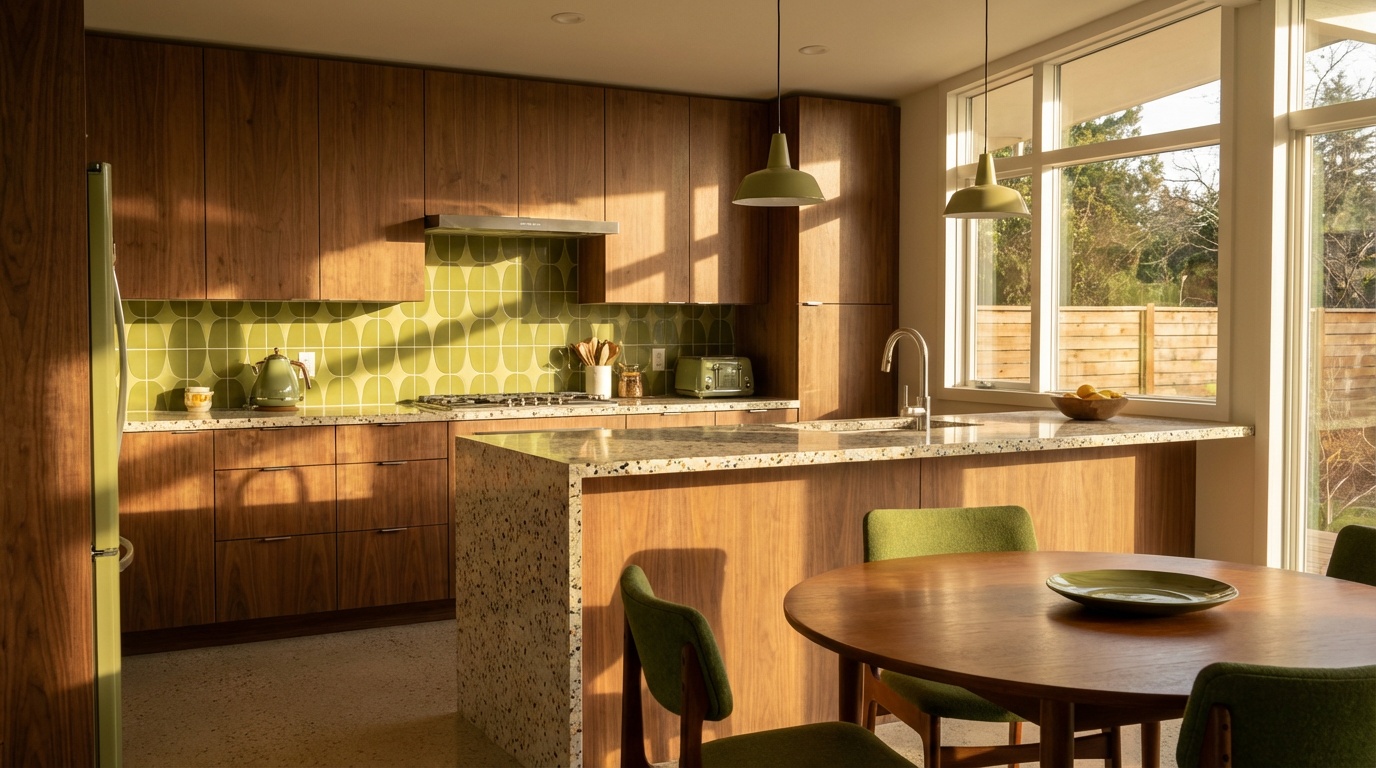
Mid-Century Modern Kitchen Remodel Ideas for a Timeless Look
Reading time: 14 minutes
Ever walked into a kitchen that felt instantly right? Clean lines, warm wood tones, a splash of avocado green or burnt orange — and yet somehow it doesn’t feel dated. That’s the magic of Mid-Century Modern (MCM) design. Born in the post-war optimism of the 1940s through 1960s, this aesthetic has never truly left the room. In 2026, it’s experiencing a remarkable resurgence, blending its retro soul with cutting-edge technology and sustainable materials.
Whether you’re planning a full gut renovation or a thoughtful refresh, this guide will walk you through everything you need to transform your kitchen into a timeless Mid-Century Modern showcase — without losing your mind (or your budget) in the process.
Table of Contents
- Why Mid-Century Modern Is Dominating Kitchens in 2026
- Core Design Principles You Can’t Ignore
- Cabinets and Storage: The Foundation of the Look
- Choosing the Right Color Palette
- Materials and Finishes That Define MCM
- Appliances: Retro Looks, Modern Performance
- Lighting Design for That Perfect Warm Glow
- Real-World Case Studies: MCM Kitchens Done Right
- Budget Breakdown and Planning
- Common Challenges and How to Overcome Them
- FAQs
- Your MCM Kitchen Blueprint: Next Steps
Why Mid-Century Modern Is Dominating Kitchens in 2026
Design trends come and go, but Mid-Century Modern keeps circling back — and there’s a very good reason for that. According to a 2025 report by the National Kitchen and Bath Association (NKBA), MCM-inspired kitchens represented 34% of all kitchen remodel requests submitted to certified designers last year, up from 27% in 2023. That’s not a blip — that’s a sustained cultural moment.
So what’s fueling this revival in 2026? A few converging forces:
- Nostalgia meets sustainability: MCM’s emphasis on natural materials like walnut, teak, and stone aligns perfectly with today’s eco-conscious homeowners who want beauty without environmental guilt.
- Minimalism fatigue: After years of stark white kitchens with zero personality, homeowners are craving warmth, color, and character — all of which MCM delivers in abundance.
- Social media amplification: Platforms like Instagram and Pinterest have been flooded with MCM kitchen content, driving aspiration and inspiration among younger homeowners aged 28–45.
- Longevity of investment: Because MCM is rooted in timeless principles rather than fleeting micro-trends, remodeling in this style holds resale value remarkably well.
Interior designer Jenna Caldwell, founder of Caldwell Studio in Austin, Texas, put it best in a 2025 interview: “Mid-Century Modern is not a trend. It’s a grammar. Once you understand how it speaks, you can apply it to any space and it will always feel relevant.”
Core Design Principles You Can’t Ignore
Before you pick a paint color or shop for hardware, you need to internalize the foundational philosophy of MCM design. Think of these as the rules of the road — follow them, and your kitchen will feel cohesive and intentional. Ignore them, and you’ll end up with a mishmash that just looks “retro” without depth.
Form Follows Function
MCM was heavily influenced by Bauhaus ideology and Scandinavian functionalism. Every element in your kitchen should earn its place. Decorative clutter? Out. A beautifully designed open shelf that displays your best ceramics while keeping them accessible? Absolutely in. This doesn’t mean your kitchen can’t have personality — it means every piece of personality should pull double duty.
Practical tip: Walk through your current kitchen and identify every item that is only decorative. In an MCM redesign, each of those items should either be replaced with something functional-and-beautiful, or removed entirely.
The Harmony of Organic and Geometric
One of the most distinctive visual signatures of MCM is the interplay between organic, natural forms and bold geometric shapes. Think: a round wooden dining table paired with angular cabinets. A curved pendant light above a rectangular island. Natural stone countertops with perfectly straight-edged cabinetry. This tension creates visual interest without chaos.
When planning your kitchen layout and choosing elements, ask yourself: “Does this piece add either a natural curve or a clean angle? Does it balance what’s already in the space?”
Connection Between Inside and Outside
MCM architecture was obsessed with blurring the line between interior spaces and the natural world. In kitchen design, this translates to maximizing natural light, using earthy and natural material palettes, and incorporating plants or herb gardens into the design scheme. If your kitchen has a window, treat it as a design asset, not an afterthought.
Cabinets and Storage: The Foundation of the Look
Your cabinets are the backbone of any kitchen remodel, and in MCM design, they carry enormous visual weight. Getting them right is non-negotiable.
Key cabinet characteristics for MCM kitchens:
- Flat-front or shaker-style doors: Avoid raised panels. MCM favors clean, flat surfaces. Slab doors in walnut veneer or painted finishes are ideal.
- Hardware with character: Tapered pulls, atomic-inspired knobs, and brushed brass or matte black hardware are authentic MCM choices. In 2026, fluted brass pulls have become particularly popular.
- Two-tone layouts: A growing 2026 trend involves pairing upper cabinets in a muted sage or warm white with lower cabinets in a rich walnut or deep teal.
- Open shelving accents: Don’t replace all your uppers with open shelves (a common mistake), but strategic open sections showcase ceramics and glassware beautifully.
- Leg details on lower cabinets: Authentic MCM pieces often appear to “float” slightly above the floor. Some designers achieve this with tapered furniture legs on the kitchen island or base cabinets for an airy effect.
Quick Scenario: Imagine your kitchen currently has traditional raised-panel oak cabinets from the 1990s. You’re not ready for a full replacement. What’s the most cost-effective MCM upgrade? Sand and refinish in a warm walnut stain, replace all hardware with brushed brass tapered pulls, and swap out two upper cabinets for open floating shelves. Total cost: roughly $800–$1,400. Total impact: transformative.
Choosing the Right Color Palette
Color is where MCM design truly comes alive — and where many homeowners make costly mistakes by going either too cautious or too extreme. The authentic MCM palette is bold but grounded, vibrant but never garish.
The Core MCM Color Story:
- Neutrals as the base: Warm whites (think cream, not stark white), tan, and warm gray create the canvas.
- Wood tones as the anchor: Walnut, teak, and oak browns are foundational. These aren’t accent colors — they’re structural.
- One or two statement colors: This is where the fun begins. Avocado green, burnt orange, harvest gold, turquoise, and terracotta are all period-authentic choices. In 2026, sage green and warm terracotta are dominating MCM kitchen renovations.
- Black as punctuation: Strategic black accents — in lighting, hardware, or appliance trim — ground the palette and add sophistication.
A helpful rule: 60-30-10. Let your neutral base occupy 60% of the visual space, your wood tones and secondary hue occupy 30%, and your statement color take up 10%. This ratio keeps the space feeling intentional rather than theme-park-ish.
2026 MCM Color Popularity — Kitchen Remodel Trends
Source: Houzz Kitchen Trends Report, 2026 (% of MCM remodel projects incorporating each color)
Materials and Finishes That Define MCM
MCM design philosophy celebrates honest, natural materials. The goal is to let wood look like wood, stone look like stone, and metal look like metal — with no pretense or imitation.
Countertops
Your countertop choices will significantly define the feel of your MCM kitchen. Here are the top contenders:
- Butcher block: Warm, tactile, and authentically retro. Walnut butcher block in particular has surged in popularity in 2025–2026. Requires regular maintenance but ages beautifully.
- Laminate (yes, really): Authentic MCM kitchens often featured Formica laminate countertops. Modern high-pressure laminates have come a long way — the 2026 iterations in speckled patterns or terrazzo-look finishes are genuinely stunning and surprisingly affordable.
- Honed marble or granite: Matte-finished natural stone has a sophistication that polished surfaces don’t. The matte finish is key — high-gloss counters feel more contemporary than MCM.
- Concrete: Custom-poured concrete countertops with a warm gray or terracotta pigment are an excellent modern-MCM hybrid choice.
Flooring Options
Flooring sets the entire stage. MCM authenticity calls for:
- Terrazzo: Arguably the single most MCM flooring choice. Whether authentic poured terrazzo or modern terrazzo-look porcelain tile, this material screams mid-century elegance. In 2026, terrazzo is the most-searched kitchen flooring term on Pinterest.
- Black and white geometric tile: Hexagons, diamonds, or bold checkerboard patterns in black and white are deeply period-appropriate and visually striking.
- Warm hardwood: Wide-plank walnut or teak-look LVP (Luxury Vinyl Plank) floors provide warmth and a seamless indoor-outdoor connection.
Appliances: Retro Looks, Modern Performance
This is where the 2026 MCM kitchen truly distinguishes itself from its historical predecessor — you can now get the aesthetic of a 1955 kitchen with the performance and energy efficiency of today’s finest appliances.
Brands like SMEG, Big Chill, and Elmira Stove Works have built entire product lines around retro-inspired design. The SMEG FAB32 refrigerator, available in over 20 colors including period-perfect pastel green and cream, remains a cornerstone MCM kitchen piece in 2026. Big Chill’s Professional Range is another standout, offering modern convection cooking in a beautifully sculpted retro frame.
Key appliance considerations for MCM:
- Color coordination: Choose appliances that align with your palette. Cream, mint, cherry red, or classic black are all MCM-appropriate.
- Rounded edges over sharp corners: Retro-inspired appliances tend to have softer, more curvaceous silhouettes that feel warm and approachable.
- Chrome and stainless accents: These complement both warm wood tones and bold color choices beautifully.
- Smart integration without visual clutter: Many 2026 retro appliances come with smart home integration built in — a hidden blessing that preserves MCM’s clean aesthetic while offering modern convenience.
Lighting Design for That Perfect Warm Glow
Lighting in an MCM kitchen is not just functional — it’s architectural. The wrong fixture can undermine months of careful design choices.
The MCM lighting hierarchy:
- Pendant lights over islands: Sputnik-inspired pendants, globe pendants in amber glass, or cone-shaped metal pendants in brass or matte black are all iconic MCM choices. Hang them lower than you think — roughly 28–32 inches above the island surface.
- Recessed lighting used sparingly: MCM design didn’t rely heavily on recessed cans. Use them for task lighting in work areas, but don’t let them be your primary ambient source.
- Under-cabinet lighting: Warm-temperature LED strips (2700K–3000K) provide excellent task lighting while enhancing the warm material palette of MCM surfaces.
- A statement ceiling fixture: If your kitchen has an eat-in area or a defined dining space, a bold ceiling fixture — think a Stilnovo-inspired starburst or a Noguchi paper lantern replica — serves as the room’s jewelry.
Pro Tip: Always use dimmable fixtures. The ability to shift from bright task lighting while cooking to warm ambient glow during dinner is essential to making the MCM aesthetic feel lived-in and inviting rather than like a showroom.
Real-World Case Studies: MCM Kitchens Done Right
Case Study 1: The Portland Bungalow Transformation
In early 2025, Portland homeowners Marcus and Claire Okafor undertook a complete MCM kitchen remodel in their 1948 craftsman bungalow. The original kitchen had been “updated” in the 1990s with white laminate cabinets and beige linoleum — a far cry from its original character.
Their approach was both historically sensitive and personally expressive. They chose flat-front walnut veneer cabinets from a local custom shop, paired with Caesarstone countertops in a warm concrete gray. The flooring — original fir hardwood, sanded and refinished to a warm honey tone — was preserved. A vintage-style SMEG refrigerator in cream anchored the space, flanked by open walnut shelving displaying their curated collection of Danish pottery.
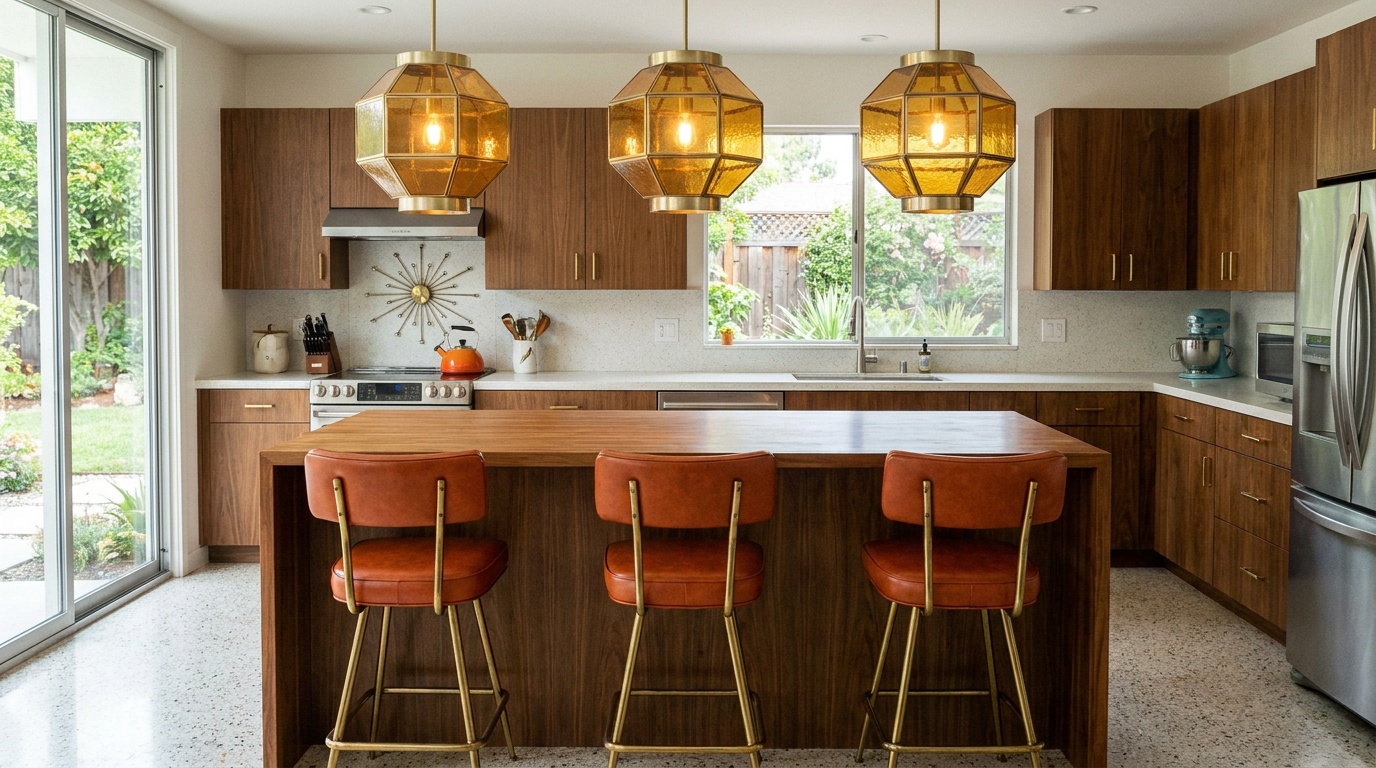
The lighting plan centered on three amber globe pendants over the kitchen island, sourced from an Etsy artisan who specializes in period-accurate reproductions. Total project cost: $38,000. Post-remodel home value increase estimated by their realtor: $52,000.
“We didn’t want to fake a museum. We wanted a kitchen that felt like it had always been there, but better,” Claire noted in a feature for Dwell Magazine in March 2025.
Case Study 2: The Manhattan Apartment Budget Refresh
Not every MCM transformation requires a six-figure budget. Brooklyn resident and food blogger Tanaka Yoshida undertook what she calls her “MCM-on-a-mission” project in late 2025, refreshing her rental-unfriendly kitchen for under $4,200.
Her strategy: work with what couldn’t be changed (white laminate cabinets and standard tile floors) and layer MCM character on top. She painted the cabinet fronts in Benjamin Moore’s “Sage Mountain” — a warm, muted green — and replaced all hardware with brushed brass tapered pulls from a budget hardware supplier. She added peel-and-stick terrazzo-pattern contact paper to the countertops, hung a set of three cone-shaped pendant lights from a removable ceiling hook installation, and introduced a vintage Eames-inspired bentwood stool at the breakfast bar.
The result garnered over 2.1 million views on TikTok and 340,000 saves on Pinterest in early 2026 — proving decisively that MCM accessibility doesn’t require a contractor and a demolition crew.
Budget Breakdown and Planning
One of the most searched questions among MCM kitchen renovation planners is simply: “How much is this going to cost me?” Here’s a clear-eyed answer.
| Remodel Scope | Estimated Cost (2026) | Key MCM Elements Included | Best For | ROI Potential |
|---|---|---|---|---|
| Cosmetic Refresh | $1,500–$5,000 | Paint, hardware, lighting, accessories | Renters, budget remodelers | Low-medium |
| Partial Remodel | $10,000–$25,000 | New cabinets or refinish, countertops, key appliances | Homeowners with functional layouts | Medium-high |
| Mid-Range Remodel | $30,000–$60,000 | Full cabinet replacement, flooring, appliances, lighting | Most homeowners targeting resale value | High |
| Full Luxury Remodel | $75,000–$150,000+ | Custom everything, structural changes, premium materials | High-end homes, forever homes | Very high in premium markets |
| DIY Hybrid | $3,000–$12,000 | Cabinet painting, peel-and-stick materials, DIY open shelving | Skilled DIYers with time | Medium |
Budget Planning Pro Tip: According to Remodeling Magazine’s 2026 Cost vs. Value Report, a mid-range kitchen remodel in the United States currently returns approximately 67–72% of its cost at resale. MCM-styled kitchens in markets with strong design-savvy buyer pools (think Portland, Austin, Denver, Brooklyn) are tracking 10–15 percentage points higher than that national average.
Common Challenges and How to Overcome Them
Challenge 1: Avoiding the “Theme Park” Trap
The most common MCM kitchen mistake is going too literal — stuffing every period-appropriate reference into one space until it feels like a set from Mad Men rather than a functional home kitchen. The solution is restraint and layering.
The fix: Choose two or three MCM signature elements (say, walnut cabinets, terrazzo floors, and a Sputnik pendant) and let those do the heavy lifting. Fill the rest of the space with timeless, neutral elements that support rather than compete. Your kitchen should whisper “mid-century” — not shout it.
Challenge 2: Balancing Authenticity with Modern Functionality
Authentic 1950s and 1960s kitchens were not exactly models of ergonomic efficiency. Counters were lower, storage was often inadequate by modern standards, and electrical infrastructure was, at best, basic. Homeowners who prioritize period purity sometimes sacrifice usability.
The fix: Think of MCM as your visual vocabulary, not a blueprint to follow literally. Raise countertops to contemporary ergonomic heights (36 inches standard, 42 inches for tall households). Add deep drawer storage. Install modern plumbing. These functional upgrades are entirely invisible to the eye — what people see is the walnut veneer and the amber glass pendant, not the concealed drawer organizers.
Challenge 3: Sourcing Authentic-Feeling Pieces Without Paying Vintage Prices
Genuine vintage MCM pieces — original Eames chairs, authentic Danish teak furniture, period Knoll accessories — are expensive and increasingly rare. Many homeowners hit a wall when they realize that “authentic MCM” sourcing could easily double their budget.
The fix: Embrace the hybrid approach. Invest in one or two genuine vintage statement pieces (a vintage ceramic lamp, an original artwork from the era) and fill the rest with high-quality contemporary reproductions or inspired pieces. Brands like Article, CB2, and West Elm offer excellent MCM-inspired pieces in 2026 at accessible price points. The key is quality — cheap plastic reproductions will undermine your entire investment.
Frequently Asked Questions
Is Mid-Century Modern kitchen design appropriate for all home architectural styles?
MCM design principles are remarkably adaptable, but they shine brightest in ranch homes, split-levels, craftsman bungalows, and mid-century homes built between 1945 and 1975. That said, MCM kitchens have been executed beautifully in Victorian townhouses, modern apartments, and even new construction homes. The key is to use MCM as an interior language that exists somewhat independently of the exterior architecture — focusing on warmth, clean lines, and natural materials that create a coherent interior world. When in doubt, consult with a designer experienced in MCM to assess whether the transition will feel organic in your specific home context.
How do I incorporate smart home technology without ruining the MCM aesthetic?
This is one of the most relevant challenges for 2026 MCM kitchen design, and the good news is that technology has largely caught up with the aesthetic. Conceal smart home hubs and control panels inside cabinet doors or drawers. Choose appliances where smart features are embedded invisibly — no glowing blue rings or oversized touchscreens. Use voice-activated lighting controls instead of app-dependent smart switches (which typically require modern-looking wall panels). For your range hood, select a sleek panel that integrates with MCM cabinetry rather than a stainless steel box. The principle is simple: if it breaks the visual story, hide it or replace it with something that doesn’t.
What’s the single most impactful MCM upgrade I can make to an existing kitchen for under $2,000?
Without question: replace your lighting. Swapping out dated fixtures for period-appropriate pendants, under-cabinet warm LEDs, and a statement ceiling piece can transform the entire mood and aesthetic of a kitchen in a single weekend. For under $2,000 in 2026, you can purchase two to three quality MCM pendant lights, under-cabinet LED strips, and a bold ceiling fixture for an eat-in area — and install all of them yourself if you’re comfortable with basic electrical work. The before-and-after difference is often more dramatic than a full cabinet repaint, because lighting controls how every other element in the room is perceived.
Your MCM Kitchen Blueprint: Next Steps
You’ve absorbed the principles, toured the case studies, and mapped the budget. Now it’s time to move from inspiration to action. Here’s your strategic roadmap for bringing your Mid-Century Modern kitchen to life:
- Step 1 — Define your scope (Week 1): Be honest about your budget and timeline. Are you doing a cosmetic refresh or a full remodel? Lock in your number before falling in love with materials.
- Step 2 — Select your MCM anchors (Week 2): Choose your two to three signature MCM elements (cabinet material, flooring type, key appliance). These are your non-negotiables. Everything else supports them.
- Step 3 — Build your palette (Week 2–3): Using the 60-30-10 rule, develop your full color story with physical material samples — not just digital images. Colors change dramatically in different light conditions.
- Step 4 — Source strategically (Weeks 3–6): Start with one genuine vintage piece that will anchor the space emotionally. Then fill in with quality contemporary options. Don’t rush — the best MCM sourcing takes patience.
- Step 5 — Sequence your project correctly: If doing a full remodel, always complete in this order: structural/electrical/plumbing, then flooring, then cabinets, then countertops, then appliances, then lighting, then accessories. Reversing this sequence is how expensive mistakes happen.
In 2026, the broader design world is moving decisively toward warmth, authenticity, and longevity — all values that Mid-Century Modern has championed since its origins. Your MCM kitchen remodel is not just an aesthetic choice; it’s an investment in a design philosophy that has proven its staying power across seven decades and shows every sign of enduring for decades more.
Here’s the real question worth sitting with: Is your kitchen currently a space you love spending time in, or just a room you pass through? Because the truest measure of a successful MCM kitchen renovation isn’t the resale value it adds or the Instagram engagement it generates — it’s how it makes you feel every morning when you walk in, reach for the coffee, and take in a space that is genuinely, beautifully yours.
Article reviewed by Pablo Reyes, Wood Flooring Installation & Restoration Expert, on May 4, 2026
