Smart Home Integrations to Consider During a Major Renovation
Smart Home Integrations to Consider During a Major Renovation
Reading time: 14 minutes
You’re knee-deep in renovation plans—picking out tile samples, arguing over cabinet finishes, and trying to remember whether you wanted undermount or farmhouse sinks. And then someone mentions smart home technology, and suddenly the to-do list feels infinite.
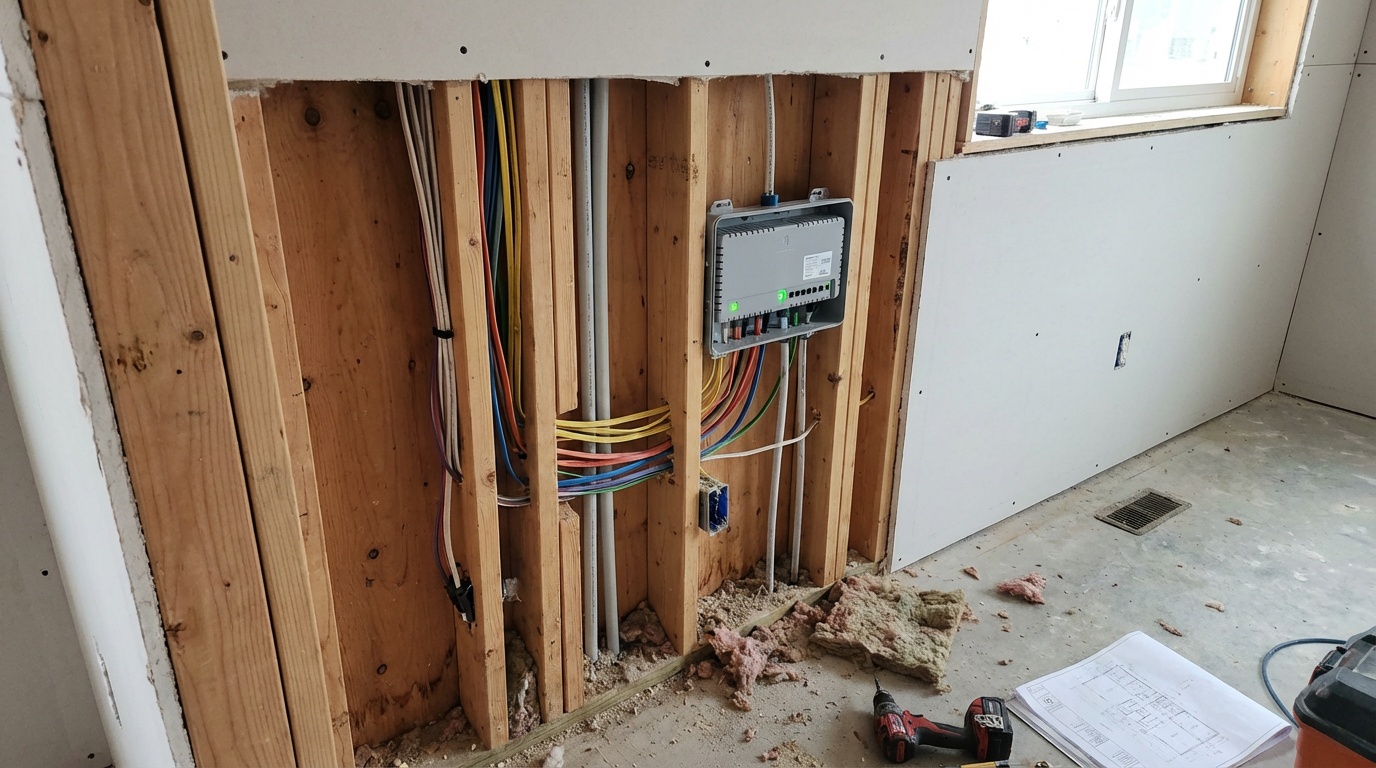
Here’s the thing: a major renovation is actually the best possible time to integrate smart home systems. Walls are already open. Electricians are already on-site. The infrastructure is exposed and accessible. Miss this window, and you’re looking at costly retrofits, visible cable runs, and limitations that could last the life of your home.
In 2026, the smart home market has matured dramatically. Gone are the days of clunky, incompatible gadgets that frustrated more than they helped. Today’s systems are interoperable, genuinely energy-efficient, and increasingly intuitive. According to a 2025 report by Statista, the global smart home market is projected to exceed $174 billion by the end of 2026, with North America and Western Europe leading adoption rates.
This guide will help you prioritize, plan, and integrate smart systems that genuinely improve your daily life—without blowing your renovation budget on tech you’ll never use.
Table of Contents
- Why Renovations Are the Golden Window for Smart Home Upgrades
- Start With the Infrastructure, Not the Gadgets
- Smart Energy Management: Where the Real Savings Live
- Security and Access Control
- Intelligent Lighting Systems
- Climate Control and HVAC Integration
- The Smart Kitchen: Practical Over Flashy
- Comparing Smart Home Ecosystems in 2026
- Common Challenges and How to Overcome Them
- Frequently Asked Questions
- Your Smart Home Renovation Roadmap
Why Renovations Are the Golden Window for Smart Home Upgrades
Think of a renovation as open-heart surgery on your home. When the walls are open, you can see the veins and arteries of the structure—the wiring, the plumbing, the framing. This is when smart home integration is not just convenient; it’s exponentially cheaper and more effective.
Consider a real-world example: The Callahan family in Portland, Oregon undertook a full kitchen and living room renovation in early 2025. Their contractor suggested integrating structured wiring, a whole-home audio backbone, and smart lighting during the rough-in phase. The total addition to their project budget? Around $4,200. When their neighbors attempted to retrofit similar systems six months later, the same scope of work cost over $11,000—largely due to drywall patching, painting, and labor overhead.
The lesson is stark and practical: smart home infrastructure is a fraction of the cost when installed during renovation. Every week you delay the decision is money you’re potentially leaving on the table—or paying back later with interest.
Key advantages of renovating with smart home systems in mind:
- Clean, concealed cable runs that preserve aesthetics
- Proper placement of sensors, speakers, and access points
- Integrated electrical planning that meets modern load requirements
- Higher resale value—homes with smart infrastructure commanded an average 5–8% premium in 2025 according to the National Association of Realtors
- Energy certifications (like LEED or ENERGY STAR) are easier to achieve when systems are planned holistically
Start With the Infrastructure, Not the Gadgets
Here’s a mistake countless renovators make: they get excited about the visible tech—the sleek touchpads, the color-changing lights, the voice-controlled everything—and forget to build the backbone that makes all of it work reliably.
Pro Tip: Think of your smart home infrastructure the same way you think about plumbing. You wouldn’t install faucets without proper pipes. Don’t install smart devices without proper wiring, networking, and power management.
Structured Wiring and Network Infrastructure
The single most valuable investment you can make during a renovation is a robust, future-proofed network infrastructure. In 2026, this means:
- Cat6A or Cat8 ethernet cabling to every room—wireless is convenient but wired connections are still faster and more reliable for critical devices
- A dedicated network closet or panel with proper ventilation and space for a router, switches, and home automation hub
- Conduit runs in walls and ceilings where possible—this allows you to upgrade cable types in the future without demolition
- Multiple Wi-Fi 7 access point locations wired in advance, even if you only install one now
- A UPS (uninterruptible power supply) for your network core—keeps your security and automation running during power blips
Electrical Planning for Smart Home Loads
Smart home devices—EV chargers, battery storage, smart panels, heat pump systems—have significantly changed the electrical demands of modern homes. Work with a licensed electrician to:
- Upgrade your main panel to at least 200A service (400A if you’re adding an EV charger and battery storage)
- Install dedicated circuits for major smart appliances
- Add USB-C and USB-A outlets throughout the home, not just in obvious places
- Consider a smart electrical panel like the Span Panel or Leviton Load Center—these allow circuit-level monitoring and control from your phone
- Pre-wire for outdoor smart features: landscape lighting, EV charging, security cameras, and smart irrigation
Smart Energy Management: Where the Real Savings Live
Energy management is arguably the highest-ROI category of smart home investment in 2026. With electricity rates rising across North America and Europe—up an average of 18% since 2023 according to the U.S. Energy Information Administration—homeowners who can intelligently manage their energy consumption are seeing meaningful savings.
A second compelling case study: A family in Austin, Texas integrated a complete smart energy stack during their 2025 home addition project. This included a Span smart panel, a 13.5 kWh Tesla Powerwall 3, a whole-home Emporia Vue 3 energy monitor, and smart thermostats. Their monthly electricity bill dropped from an average of $340 to $89 within four months of completion—a reduction of over 73%.
The key components of a smart energy strategy:
- Smart electrical panels — provide real-time, circuit-level energy monitoring and remote control
- Home battery storage — store solar energy or off-peak grid power for use during peak pricing periods
- Smart EV charging — schedule charging during low-rate overnight windows automatically
- Whole-home energy monitors — identify energy vampires and unusual consumption patterns
- Solar-ready wiring — even if you’re not installing solar now, pre-wire for future panels and inverters
Security and Access Control
Security was once about deadbolts and alarm systems. In 2026, it’s a layered, intelligent ecosystem that deters, detects, documents, and notifies—often before you even know there’s an issue.
During renovation, you have the opportunity to install security infrastructure invisibly and elegantly:
- Flush-mounted security cameras with clean cable runs to a central NVR
- Video doorbells with proper power wiring (not just battery-dependent)
- Smart locks with backup keypads, fingerprint readers, and app-based access
- Motion sensors integrated into walls and ceilings rather than mounted as afterthoughts
- Panic buttons and manual override systems for whole-home lockdown scenarios
- Smart garage doors with real-time open/close alerts and auto-close timers
Important consideration: In 2026, local AI processing has become the preferred approach for home security cameras. Systems like Synology Surveillance Station or Frigate NVR allow you to run sophisticated object detection locally—without cloud subscription fees or privacy concerns. Wire for local storage capability even if you opt for a hybrid approach.
Intelligent Lighting Systems
Smart lighting has come a long way from novelty color bulbs. Today’s systems offer circadian rhythm support, occupancy-based automation, energy efficiency, and seamless scene creation that genuinely transforms how a space feels.
Choosing Between Wired and Wireless Smart Lighting
This is a critical decision to make during the rough-in phase of your renovation. You essentially have two paths:
Option A: Smart Switches with Standard Wiring
Replace traditional switches with smart switches (Lutron Caseta, Leviton Decora Smart, or Zooz Z-Wave) while keeping conventional bulbs. Pros: no bulb replacement needed, works with any fixture, very reliable. Cons: requires neutral wire at switch locations (plan for this during renovation).
Option B: Smart Bulbs with Traditional Switches
Keep conventional switches and use smart bulbs throughout. Pros: flexible, easily changed. Cons: someone turning off the switch cuts power to smart bulbs entirely, causing frustration.
Option C: Dedicated Smart Lighting Systems
Wired systems like Lutron RadioRA 3 or Control4 lighting offer the most robust, professionally-installed experience. Higher upfront cost, but nearly zero maintenance and exceptional reliability. Ideal for whole-home renovations with larger budgets.
Pro Tip: Regardless of which system you choose, install neutral wires at every switch box during rough-in. This costs almost nothing extra during construction but opens up every smart switch option available now and in the future.
Lighting Zones and Scenes Worth Planning
Think about how you actually live in your home and program your lighting accordingly:
- Wake scenes: gradually brightening lights that simulate sunrise
- Away mode: randomized lighting patterns that simulate occupancy
- Movie mode: living room dims automatically when your TV turns on
- Outdoor sensors: pathway and landscape lighting that responds to dusk and motion
- Circadian tuning: color temperature shifts from cool white in morning to warm amber at night
Climate Control and HVAC Integration
Climate control accounts for roughly 40–50% of a typical home’s energy consumption. Smart HVAC integration isn’t just convenient—it’s financially transformative.
During renovation, consider these upgrades:
- Multi-zone HVAC systems with smart thermostats in each zone—heat the rooms you use, not the ones you don’t
- Smart thermostats like the Ecobee SmartThermostat Premium or Nest Learning Thermostat 4th Gen (released in late 2024)—these learn your patterns and adjust proactively
- Smart ventilation: ERV or HRV systems with automated controls that monitor CO₂ and humidity
- Radiant floor heating with smart controls—pre-wire for these during subfloor installation; adding later requires tearing up floors
- Heat pump readiness: ensure your electrical system and ductwork can support a heat pump conversion, which is increasingly being mandated in new construction across multiple U.S. states by 2027
The Smart Kitchen: Practical Over Flashy
The kitchen is where smart home hype often outpaces practical value. A voice-controlled coffee maker that requires a 12-step setup isn’t a smart home win—it’s an expensive disappointment. Focus on integrations that genuinely reduce friction.
High-value smart kitchen integrations:
- Under-cabinet lighting on smart dimmers—far more useful daily than any smart appliance
- Smart range hoods that activate automatically when cooktop heat is detected
- Smart leak detectors under the sink and near the dishwasher—can prevent thousands in water damage
- Dedicated outlet circuits for high-draw appliances with smart plug monitoring
- Induction cooktops with smart controls—compatible with automation for timed cooking and remote shutoff
Skip for now (until the tech matures further): fully automated pantry inventory systems, smart fridges with internal cameras, and voice-controlled appliances that require their own proprietary apps. These categories still suffer from fragmentation and questionable longevity.
Comparing Smart Home Ecosystems in 2026
Choosing an ecosystem is one of the most strategic decisions of your smart home renovation. The good news: as of 2026, the Matter protocol—a universal smart home standard—has significantly reduced lock-in concerns. Most major platforms now support cross-ecosystem device communication.
| Ecosystem | Best For | Matter Support | Local Processing | Avg. Setup Cost |
|---|---|---|---|---|
| Apple HomeKit / Home | Apple device users, privacy-focused | ✅ Full | ✅ Strong | $800–$2,500 |
| Google Home | Android users, voice control | ✅ Full | ⚠️ Partial | $500–$2,000 |
| Amazon Alexa | Broad device compatibility | ✅ Full | ⚠️ Partial | $400–$1,800 |
| Home Assistant | Tech-savvy users, maximum control | ✅ Full | ✅ Full | $300–$1,200 |
| Control4 / Crestron | Luxury/professional installs | ✅ Full | ✅ Full | $5,000–$50,000+ |
Smart Home Feature Adoption Rate (2026)
Based on a 2025 Parks Associates survey of U.S. broadband households:
Common Challenges and How to Overcome Them
Challenge 1: Budget Creep and Technology Overwhelm
Smart home integration has a well-earned reputation for scope creep. You start with a smart thermostat and suddenly you’re pricing whole-home automation systems that cost more than your kitchen renovation.
The solution: Use a tiered planning approach. Divide your smart home wishlist into three categories:
- Must-Do Now (during rough-in): infrastructure wiring, conduit, electrical upgrades, neutral wires, network backbone
- Should-Do at Finish: smart panel, smart switches, thermostat, key security devices
- Nice-to-Have Later: voice assistants, smart appliances, advanced AV systems
This approach keeps your renovation on budget while ensuring the expensive-to-retrofit items are handled at the right time.
Challenge 2: Contractor Knowledge Gaps
Not all contractors are fluent in smart home infrastructure. A well-meaning electrician who has never run structured wiring may not understand the importance of home run cabling topology or the placement of wireless access points.
The solution: Bring in a dedicated AV or smart home integrator for a pre-construction consultation—even if you’re doing a DIY smart home system. Many integrators offer consultation-only services for $150–$400. Their input during the planning phase can prevent costly errors. You can also reference resources from CEDIA (Custom Electronic Design and Installation Association), the industry body that certifies smart home professionals.
Challenge 3: Privacy and Data Security Concerns
Smart home devices collect enormous amounts of behavioral data. In 2026, with AI-powered home systems increasingly capable of detailed pattern recognition, privacy is a legitimate concern—not just for tech enthusiasts but for everyday homeowners.
The solution: Design your smart home with local-first principles:
- Use a local home automation hub (Home Assistant is free and open-source) that processes data on your own hardware
- Segment IoT devices on a dedicated VLAN so they cannot access your sensitive home network
- Choose cameras and sensors that offer local storage options alongside or instead of cloud storage
- Review device privacy policies before purchase and prefer brands with strong track records (avoid no-name devices with unclear data practices)
Frequently Asked Questions
How much should I budget for smart home integration during a major renovation?
A reasonable starting budget for smart home infrastructure during a mid-scale whole-home renovation is 3–7% of total renovation cost. For a $150,000 renovation, that’s $4,500–$10,500. This covers structured wiring, upgraded electrical, network infrastructure, smart lighting switches, a thermostat, and basic security. Full luxury automation systems (Control4, Crestron, Savant) start around $15,000 and can exceed $80,000 for large properties. The key is to front-load the infrastructure investment—devices can always be added later, but wiring is cheapest now.
Is it better to choose one smart home ecosystem or mix and match?
In 2026, the Matter protocol has made mixing ecosystems significantly more viable than it was even two years ago. Most new devices support Matter, meaning a Google Home hub can communicate with Apple HomeKit devices and Amazon Alexa. That said, choosing a primary hub platform and treating others as secondary still produces the most reliable and seamless experience. Home Assistant is increasingly popular as the agnostic primary hub, with Apple, Google, or Amazon serving as voice interface layers. Avoid deep integration with proprietary ecosystems that haven’t committed to Matter support.
What smart home features add the most resale value to a home?
According to a 2025 Coldwell Banker Real Estate Smart Home Survey, the features that most positively influenced buyer perception and willingness to pay a premium were: smart security systems (video doorbell, cameras, smart locks), smart thermostats, and whole-home network infrastructure. Interestingly, flashier items like voice assistants and smart appliances ranked lower in influencing purchase decisions—buyers valued reliability and security over novelty. Solar readiness and EV charging infrastructure were the fastest-rising value-add features in 2025, consistent with broader energy transition trends.
Your Smart Home Renovation Roadmap: Wire Now, Thrive Later
You’re making one of the most significant investments of your life. The difference between a renovation that ages beautifully and one that frustrates you daily often comes down to the decisions made before the drywall goes up. Smart home integration is no longer optional for future-proofed homes—it’s foundational.
As AI-powered home management, energy grid integration, and aging-in-place technologies accelerate through 2026 and beyond, homes with intelligent infrastructure will increasingly pull ahead of those without. The question isn’t whether smart home technology will become ubiquitous—it already is. The question is whether your home will be ready to participate.
Your immediate action plan:
- This week: Add a smart home infrastructure consultation to your renovation planning process—contact a CEDIA-certified integrator or AV professional for even a single planning session before finalization.
- At rough-in: Prioritize conduit, Cat6A home runs, neutral wires at all switch boxes, and a dedicated network closet. These are non-negotiables.
- At electrical rough-in: Discuss smart panel options, dedicated EV circuit, and solar/battery readiness with your electrician. Upgrade your panel service if needed.
- At finish phase: Install smart switches, thermostat, core security devices, and your network hub. Activate your chosen automation platform.
- Post-move-in: Layer in voice assistants, smart appliances, and advanced automations over time. Now that your infrastructure is solid, additions are plug-and-play.
Key takeaways to carry with you:
- Infrastructure before devices—always. Wiring is cheap during renovation; it’s expensive after.
- Prioritize local processing and privacy-respecting systems from the start.
- Matter protocol has transformed ecosystem compatibility—don’t let fear of lock-in paralyze your decisions.
- Energy management integrations offer the fastest and most measurable ROI of any smart home category.
- The right preparation isn’t about having the most tech—it’s about having the right tech, installed at the right time.
Here’s a thought to close with: a decade from now, when your home seamlessly manages its own energy, keeps your family secure without effort, and adapts its environment to your needs before you even articulate them—will you look back and wish you’d installed one less smart switch to save $200? Or will you wish you’d planned just a little more boldly?
The walls are open. The opportunity is now. What will your home be capable of?
Article reviewed by Pablo Reyes, Wood Flooring Installation & Restoration Expert, on May 4, 2026
