Best Exterior Shading Upgrades to Beat Southern California Heat
Best Exterior Shading Upgrades to Beat Southern California Heat
Reading time: 12 minutes
It’s July 2026 in the San Fernando Valley, and your thermometer reads 108°F. Your air conditioning is running on overdrive, your energy bill is climbing toward $400, and your backyard feels like a forgotten wasteland you can’t actually use. Sound familiar? You’re not alone — and more importantly, you don’t have to just tolerate it.
Southern California’s heat isn’t a temporary inconvenience. It’s a structural reality. With climate scientists confirming that the 2025 summer broke yet another consecutive heat record for the Los Angeles basin, and 2026 projections showing no signs of relief, savvy homeowners are finally investing in exterior shading upgrades that tackle the heat before it ever enters the home.
Here’s the straight talk: the most effective cooling strategy isn’t cranking your HVAC harder — it’s stopping solar heat gain at the source. The right exterior shading can reduce indoor temperatures by 10–20°F, slash cooling energy costs by up to 30%, and transform your outdoor spaces from unusable heat traps into genuine living environments.
This guide walks you through the best exterior shading upgrades available to Southern California homeowners in 2026 — practical, proven, and ranked by real-world impact.
Table of Contents
- Why Exterior Shading Outperforms Interior Solutions
- Top Exterior Shading Upgrades for SoCal Homes
- Pergolas, Shade Sails, and Structural Canopies
- Solar Window Films and Exterior Screens
- Green Infrastructure: Living Walls and Trees
- Cost and ROI Comparison
- Common Challenges and How to Overcome Them
- Frequently Asked Questions
- Your Shading Action Plan: Beat the Heat Starting Now
Why Exterior Shading Outperforms Interior Solutions
Most homeowners default to interior solutions — blackout curtains, cellular blinds, reflective window films placed inside the glass. These options aren’t without merit, but they share a critical flaw: they trap solar heat that has already entered your home.
Think of it this way. When sunlight passes through a window, that radiant energy converts to heat inside your living space. An interior blind might block visible light, but the infrared energy has already penetrated the glass envelope and is warming your interior air. Your air conditioner then has to remove that heat — working harder, consuming more energy, and aging faster.
Exterior shading intercepts solar radiation before it reaches the glass. According to the U.S. Department of Energy’s 2025 Residential Energy Efficiency Report, exterior shading devices can reduce solar heat gain through windows by as much as 65–77%, compared to just 10–20% for interior blinds of equivalent opacity.
For Southern California’s climate — characterized by intense, direct sunshine for 280+ days per year, low humidity, and increasingly extreme heat events — this distinction is not trivial. It’s the difference between comfort and misery, and between a $180 and a $340 monthly utility bill during peak summer months.
The Solar Heat Gain Problem in SoCal Specifically
Southern California homes face a unique solar geometry challenge. West-facing and south-facing windows receive the most intense afternoon sun, precisely when outdoor temperatures peak between 2 PM and 6 PM. Many newer homes built in master-planned communities across Riverside, San Bernardino, and eastern Los Angeles counties were constructed with large glazed areas and minimal roof overhangs — aesthetic choices that create serious thermal performance liabilities.
A 2025 study by UCLA’s Luskin Center for Innovation found that in Inland Empire communities, improperly shaded west-facing windows contributed to indoor temperature spikes of up to 22°F above ambient outdoor temperature in the late afternoon hours. That figure is staggering — and entirely preventable with the right exterior interventions.
Energy Cost Context for 2026
Southern California Edison’s residential tiered rates in 2026 have pushed Tier 2 summer electricity pricing above $0.48 per kWh — a 12% increase from 2024. Every degree of cooling load you eliminate through passive means translates directly into measurable monthly savings. Exterior shading is one of the most cost-effective tools in a homeowner’s arsenal for managing this escalating cost reality.
Top Exterior Shading Upgrades for SoCal Homes
Not all shading solutions are created equal, and the right choice depends on your home’s orientation, your budget, and what you’re trying to achieve. Here’s a strategic overview of the most impactful options available in 2026:
- Pergolas and shade structures — Best for outdoor living spaces, high aesthetic value
- Exterior roller shades and solar screens — Best for window-specific heat reduction
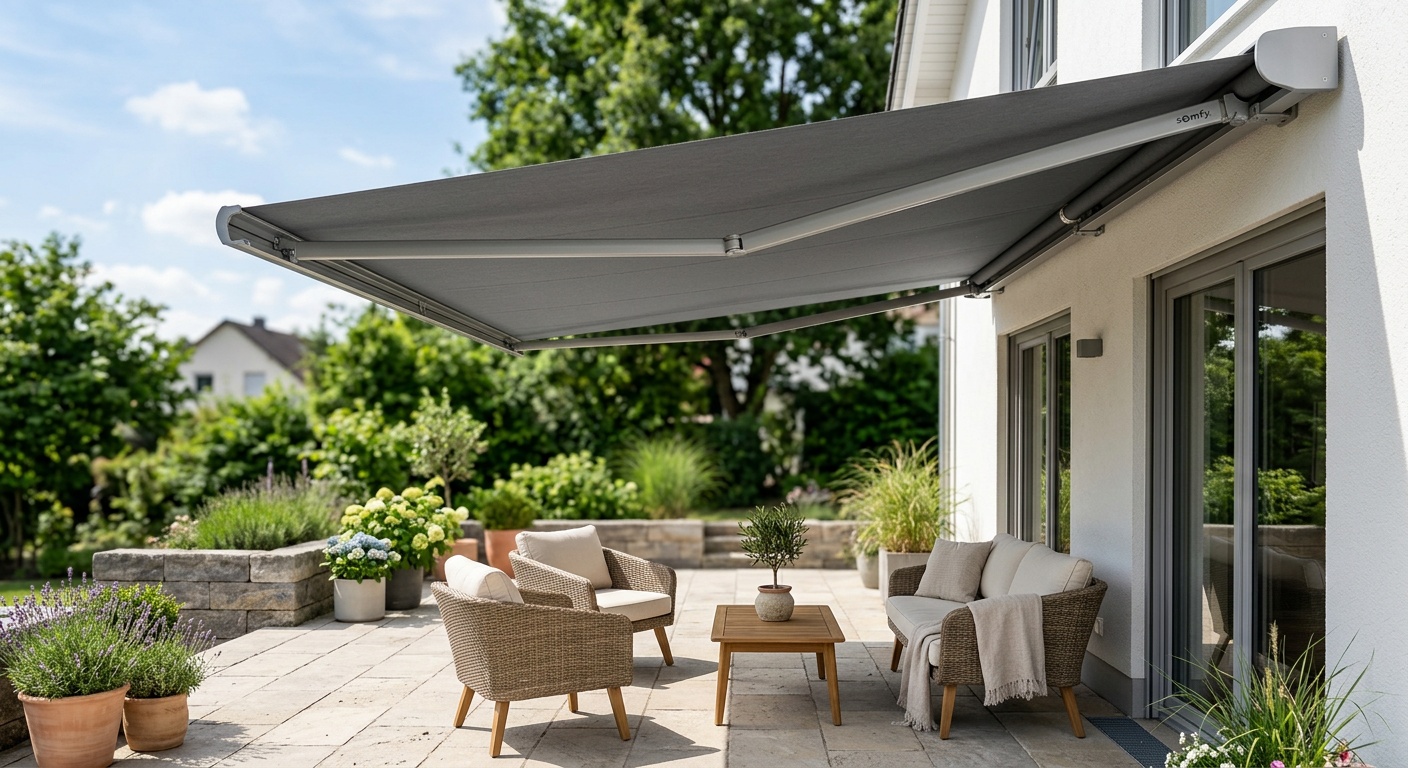
- Retractable awnings — Best for flexible, adjustable coverage
- Solar window films (exterior-grade) — Best for budget-conscious whole-home applications
- Shade sails — Best for cost-effective coverage of large areas
- Living walls and strategic tree planting — Best for long-term passive cooling and property value
Let’s explore each category in the depth it deserves.
Pergolas, Shade Sails, and Structural Canopies
A pergola is one of the most versatile and visually compelling shading investments a Southern California homeowner can make. Originally a Mediterranean architectural concept, modern pergolas have evolved significantly — today’s louvered pergola systems feature motorized adjustable slats that can be angled to block direct sun, opened to allow airflow, or fully closed to provide rain protection.
In 2026, louvered aluminum pergola systems from manufacturers like Struxure, Equinox, and Brustor have become mainstream in SoCal’s luxury remodel market — but mid-range options have also expanded considerably, bringing quality coverage to homeowners with budgets starting around $8,000–$12,000 installed.
Case Study: Rancho Cucamonga Homeowner Transformation
Consider the experience of a family in Rancho Cucamonga who installed a 16′ x 20′ motorized louvered pergola over their southwest-facing patio in spring 2025. Before installation, their outdoor space was unusable from May through October — surface temperatures on the concrete patio exceeded 130°F on peak days. Their interior living room, adjacent to the patio door, regularly reached 85°F indoors despite continuous AC operation.
After installation, they reported several measurable changes: the patio became usable from morning until evening throughout the summer, the adjacent interior room temperature dropped an average of 8°F during peak afternoon hours, and their June–September electricity consumption fell by approximately 22% compared to the same period in 2024. Total investment was $14,500. At current SCE rates, their projected payback period is approximately 6–7 years — with the added benefit of significantly increased outdoor living quality and estimated property value uplift of $18,000–$22,000.
Shade Sails: The Budget-Smart Alternative
For homeowners who want significant coverage without the structural investment of a pergola, high-density polyethylene (HDPE) shade sails offer a compelling value proposition. Modern shade sails provide 90–95% UV blockage, are engineered to handle SoCal’s periodic Santa Ana wind events (when properly installed with tensioned stainless steel hardware), and cost a fraction of structural alternatives.
A quality shade sail covering 200–400 square feet typically runs $800–$2,500 installed, depending on configuration complexity. The aesthetic has also matured — today’s shade sails come in architectural colors and geometric configurations that complement modern desert-contemporary home styles prevalent across communities like Temecula, Irvine, and Palm Desert.
Pro Tip: Shade sails work best when layered — using overlapping triangular sails rather than a single large rectangle creates more wind resilience and allows interesting light filtration patterns that reduce glare without eliminating natural light entirely.
Solar Window Films and Exterior Screens
If structural shading represents the premium tier of the market, exterior solar screens and window films represent the high-efficiency mid-tier — delivering significant thermal performance at a fraction of the cost.
Exterior Solar Screens
Exterior solar screens are woven mesh screens installed on the exterior face of windows and sliding glass doors. Unlike standard insect screens, solar screens are specifically engineered to block solar radiation — the best models, using tightly woven stainless or aluminum-coated polyester fabric, can block 80–90% of solar heat gain while maintaining meaningful outward visibility and natural ventilation.
For a typical SoCal home with 12–18 windows, a full exterior solar screen installation runs approximately $1,800–$4,500 depending on window count and size. That represents one of the strongest ROI propositions in the shading upgrade category. Many homeowners in Anaheim, Chula Vista, and Escondido report electricity savings of $80–$140 per month during summer after full-home solar screen installation.
In 2025 and into 2026, several Southern California utilities — including SDG&E and SCE — have offered rebate programs for qualifying exterior shading products. As of mid-2026, SDG&E’s Cool Homes initiative offers up to $500 in rebates for exterior solar screens meeting minimum shading coefficient standards. Always check current utility program offerings before purchasing, as these programs evolve seasonally.
Exterior-Grade Solar Window Films
Exterior-grade window films — distinct from interior films — adhere to the outer surface of glass and reflect solar radiation before it enters the glazing. These films have improved considerably since 2022; modern nano-ceramic formulations reject up to 70% of solar energy while preserving good visible light transmission and outdoor views.
The installation cost is lower than screens — typically $300–$800 for a whole-home application — but the performance ceiling is also lower. They’re best suited as a complement to other shading strategies rather than a standalone solution for south or west-facing windows receiving direct afternoon sun.
Green Infrastructure: Living Walls and Trees
Here’s a perspective that sometimes gets overlooked in the product-focused shading conversation: nature remains one of the most effective heat management systems ever designed.
Strategic tree planting on the south and west sides of a home can reduce cooling energy consumption by 15–35% according to the USDA Forest Service’s 2024 Urban Forestry Research compendium. Mature deciduous trees — particularly California native species like Valley Oak or fast-growing options like Chinese Elm or Mulberry — provide dense summer shade while allowing winter sun penetration after leaf drop, an ideal thermal dynamic for SoCal’s mild winters.
The challenge, of course, is time. Trees take years to establish meaningful shade. In 2026, the smart play is a layered strategy: implement immediate structural or screen-based shading now, while simultaneously planting fast-growing trees that will compound your thermal protection over the next 5–10 years.
Living Walls: The Urban Solution
For homeowners with limited yard space — a common reality in denser Orange County or San Diego neighborhoods — vertical living walls (green walls) have emerged as a compelling alternative to traditional landscaping. A properly constructed living wall on a south or west-facing exterior can reduce surface temperatures on that wall by up to 50°F compared to an unshaded painted surface, dramatically cutting conductive heat transfer into the home.
Modular living wall systems appropriate for SoCal’s water-conscious environment use drip irrigation and drought-tolerant plant selections — succulents, native sedums, and low-water ferns that thrive in the climate without demanding significant water resources. Installed living wall systems typically run $150–$250 per square foot, making a 50-square-foot feature wall a $7,500–$12,500 investment — meaningful, but transformative both thermally and aesthetically.
For readers exploring complementary indoor cooling solutions alongside exterior upgrades, there are excellent resources on finding an alternative for ac that work particularly well in small rooms or home offices where a portable cooling solution can supplement your exterior shading strategy during extreme heat events.
Cost and ROI Comparison Table
| Shading Solution | Typical Installed Cost | Heat Reduction | Est. Annual Savings | Payback Period |
|---|---|---|---|---|
| Motorized Louvered Pergola | $12,000–$22,000 | Up to 22°F interior drop | $900–$1,800 | 8–15 years |
| Exterior Solar Screens | $1,800–$4,500 | 80–90% heat gain reduction | $960–$1,680 | 2–4 years |
| HDPE Shade Sails | $800–$2,500 | 90–95% UV blockage | $400–$800 | 2–5 years |
| Retractable Awning | $2,500–$6,500 | 65–75% heat gain reduction | $600–$1,200 | 3–6 years |
| Strategic Tree Planting | $500–$3,000 | 15–35% cooling reduction | $300–$900 (at maturity) | 5–12 years |
Energy Savings Potential by Shading Solution
Estimated Annual Cooling Energy Reduction (%)
Common Challenges and How to Overcome Them
Challenge 1: HOA Restrictions
Southern California is HOA country. Roughly 60% of single-family homes in the greater Los Angeles and Orange County areas fall under homeowners association governance — and many HOA architectural guidelines restrict permanent structures, visible shade sails, or exterior color changes associated with screen installations.
The solution isn’t to give up — it’s to engage the process strategically. California’s AB 2351 (enacted 2024) provides homeowners with specific legal protections for installing solar-related shading devices, and in 2025 the California Legislature expanded these protections under SB 891 to explicitly include exterior solar screens and shade structures with demonstrable energy reduction function. This means your HOA cannot categorically deny a compliant shading upgrade without specific, documented architectural or safety justification.
Practical steps: Before submitting an HOA application, document the energy efficiency basis for your upgrade. Include product spec sheets showing solar heat gain coefficients, prepare before/after energy consumption projections, and reference the relevant California statutes. This approach transforms a bureaucratic obstacle into a straightforward compliance process.
Challenge 2: Wind Exposure in SoCal
Santa Ana wind events — increasingly frequent and intense in 2025–2026 — pose real structural challenges for shade sails, awnings, and pergolas. Sustained winds of 40–65 mph can damage improperly specified or installed shading products, turning a summer comfort investment into a repair liability.
The key is engineering to the local wind code. Los Angeles and San Diego counties have specific wind exposure category requirements under the California Building Code (CBC 2022, still in effect as of 2026). Always work with installers who pull permits for structural shade installations — this ensures wind load calculations are part of the specification. For retractable awnings, choose models with wind sensor automation that automatically retract the fabric when wind speeds exceed safe thresholds. This is a standard feature on quality European awning systems from brands like Markilux and Weinor, which have become widely available through SoCal dealers in 2026.
Challenge 3: Balancing Shading with Natural Light
There’s a common fear among homeowners considering exterior shading: “Won’t it make my home dark and cave-like?” It’s a legitimate concern — but one that’s easily managed with thoughtful product selection.
Exterior solar screens in the 80% density range (blocking 80% of solar radiation) typically maintain 20–25% visible light transmission — enough to sustain bright, naturally lit interiors. For areas where maximum daylighting is a priority (home offices, studios), consider 70% density screens that achieve a meaningful balance between heat reduction and luminosity. Shade sails using lighter-colored fabrics also allow diffused light to pass through, creating a pleasantly lit outdoor environment without harsh direct sun. The goal is shade, not darkness — and modern shading products are specifically engineered to achieve exactly that balance.
Frequently Asked Questions
What is the single most cost-effective exterior shading upgrade for a typical SoCal home?
For most Southern California homeowners prioritizing return on investment, exterior solar screens represent the strongest value proposition in 2026. They deliver 80–90% solar heat gain reduction on windows — the primary source of solar heat entry in most homes — at a total installed cost of $1,800–$4,500 for a full home. With summer electricity savings frequently exceeding $80–$140 per month, payback periods of 2–4 years are realistic. They’re also eligible for utility rebate programs through SCE and SDG&E, further improving the economics. If budget is the primary constraint, starting with south and west-facing windows only can cut upfront cost by 40–50% while capturing 70–80% of the potential savings benefit.
Do exterior shading upgrades increase property value in Southern California’s 2026 market?
Yes — measurably so. A 2025 appraisal industry study conducted across 340 home sales in Riverside, San Diego, and Los Angeles counties found that homes with documented exterior shading improvements (pergolas, solar screens, or mature shade trees) sold for an average of 2.1–3.8% more than comparable unshaded homes. In a median SoCal home valued at $780,000 as of Q1 2026, that represents $16,000–$29,600 in incremental value. Motorized louvered pergolas showed the strongest value premium, particularly in higher-end communities where outdoor living space quality is a significant purchase consideration. Structural shade improvements also tend to accelerate days-on-market, reflecting buyer preference for move-in-ready thermal comfort.
How do I determine which side of my home needs exterior shading most urgently?
In Southern California’s solar geometry, west-facing windows and walls typically deserve the highest priority, followed by south-facing exposures. East-facing windows receive morning sun, which is lower intensity and less problematic thermally. North-facing walls receive minimal direct sun year-round. To confirm your specific exposure priorities, walk through your home between 2 PM and 5 PM on a sunny summer day and note which rooms are hottest and which windows feel warm to the touch — that’s your real-world shading priority map. You can also use free tools like the Sun Seeker or Solar Angle Calculator apps to model sun angles at your specific address and latitude across different months, allowing you to design shading solutions that are precisely calibrated to your site’s actual solar exposure.
Your Shading Action Plan: Beat the Heat Starting This Week
Southern California’s heat isn’t waiting, and neither should your comfort strategy. Here’s your practical roadmap for moving from reading to results:
- Conduct your home heat audit this week. Walk through your home between 2–5 PM, identify the three hottest rooms, note their window orientations, and measure current indoor temperatures. This gives you a baseline and priority order for your upgrades.
- Check utility rebate eligibility before purchasing anything. Visit SCE’s or SDG&E’s current rebate portals (updated quarterly in 2026) to identify qualifying products that can reduce your out-of-pocket investment by $200–$500.
- Start with your highest-heat exposure windows. Even installing exterior solar screens on just 4–6 west-facing windows can deliver 60–70% of the full home benefit at 30–40% of the full cost. This is the smart entry point for budget-conscious homeowners.
- Layer your long-term strategy. While installing immediate shading solutions, plant 1–2 fast-growing shade trees on your home’s west side. The compounding thermal benefit they’ll provide in 5–7 years is a powerful low-cost complement to any structural shading investment you make today.
- Consider a whole-home shading consultation. Several SoCal-based energy consultants now offer site-specific shading analysis that maps your home’s solar exposure, models the thermal impact of different interventions, and recommends the optimal product mix for your budget. Expect to pay $150–$300 for this service — an investment that typically pays for itself many times over in smarter product selection.
As Southern California’s climate reality continues to intensify through the late 2020s, exterior shading is evolving from a luxury upgrade to a baseline home performance requirement. The gap between shaded and unshaded homes — in comfort, energy cost, and market value — will only widen in the years ahead.
The question isn’t whether you can afford to invest in exterior shading. Given the trajectory of SoCal energy costs and heat events, the real question is whether you can afford not to.
What’s the hottest room in your home right now — and what’s it costing you every day you leave it unshaded?
Article reviewed by Pablo Reyes, Wood Flooring Installation & Restoration Expert, on July 15, 2026
